
Historical Events
41 Days That Shattered Dictatorships Forever – The Velvet Revolution Blueprint
How Eastern Europe’s bloodless uprisings created a revolutionary playbook that changed political transformation forever – and why it still works today.

Published
3 months agoon
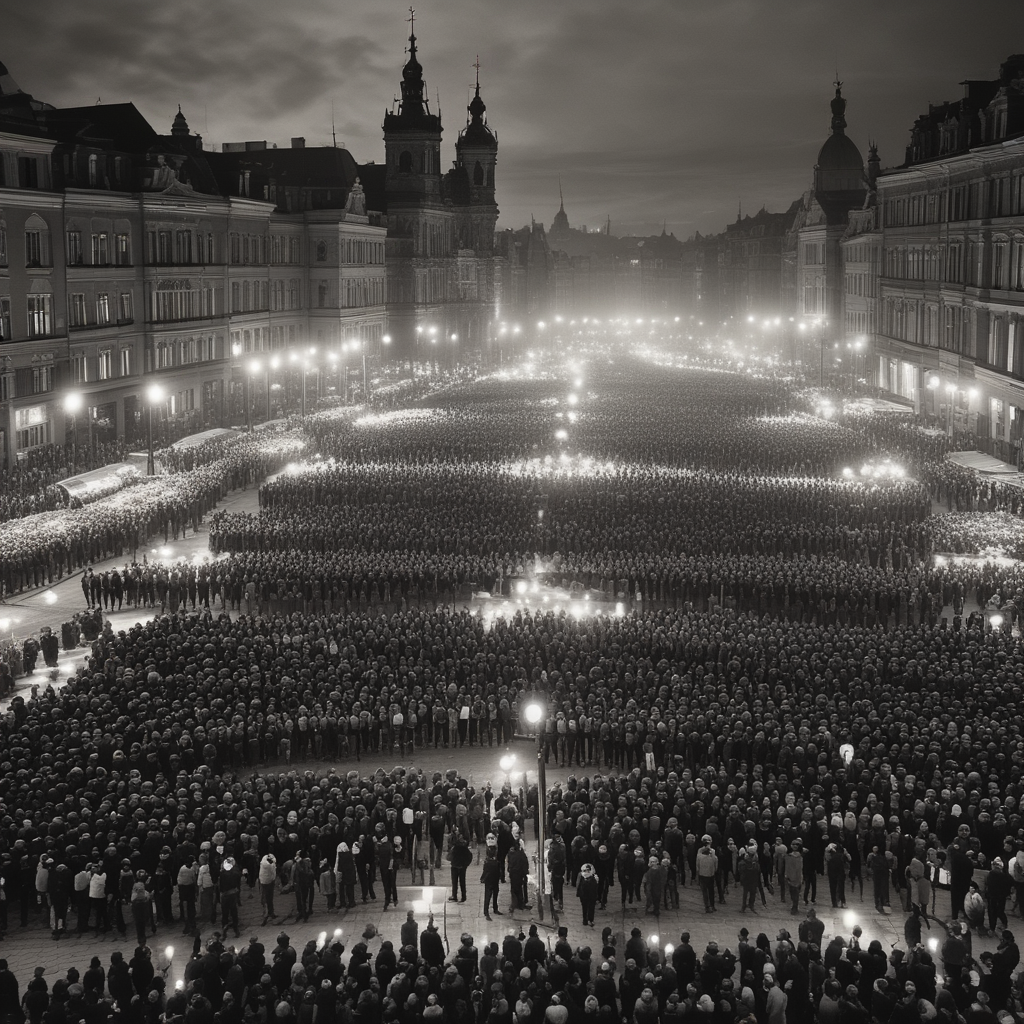
Imagine toppling a 41-year-old dictatorship in just 41 days without firing a single shot. This isn’t fantasy – it’s the remarkable reality of Czechoslovakia’s Velvet Revolution, which proved that the sound of jingling keys could be more powerful than tanks rolling through Prague’s streets.
The term “velvet revolutions” has since become synonymous with peaceful political transformation, representing a complete paradigm shift in how oppressed populations can achieve democratic change. From the cobblestone squares of Eastern Europe to the digital-age protests of modern Armenia, these bloodless uprisings have rewritten the fundamental rules of political resistance.
The Original Blueprint: Czechoslovakia’s 41-Day Miracle
On November 17, 1989, what began as a student demonstration in Prague would evolve into one of history’s most successful examples of non-violent resistance. The original Velvet Revolution lasted exactly 41 days, bringing an end to four decades of communist rule through strategic peaceful protest.
The revolution’s success hinged on several critical factors:
- Mass mobilization: Hundreds of thousands of citizens participated in coordinated protests
- Symbolic unity: The jingling of keys became a powerful symbol, representing the unlocking of freedom
- Strategic non-violence: Protesters deliberately avoided confrontation with security forces
- Unified leadership: Opposition groups coalesced around clear demands and leadership
What made this transformation truly revolutionary wasn’t just its speed, but its method. Unlike previous uprisings that were brutally suppressed, the Velvet Revolution succeeded because it psychologically disarmed the regime’s capacity for violent response.
The Spanish Model: Gradual Democratic Transition
While Czechoslovakia’s revolution was swift and dramatic, Spain’s transition to democracy offered a different template for peaceful transitions. Spain’s democratic transition concluded with the 1982 general election, marking the first truly peaceful transfer of executive power after Franco’s dictatorship.
The Power of Institutional Reform
Spain’s approach demonstrated that velvet revolutions don’t always require mass street protests. Instead, the Spanish model showed how:
- Constitutional frameworks could facilitate peaceful change
- Gradual reform could build sustainable democratic institutions
- Compromise between opposing forces could prevent violent conflict
- Time and patience could solidify democratic norms
As one expert noted, the Spanish transition resulted in “a parliamentary monarchy, based on a democratic constitution, with a large number of rights and freedoms, the consequence of a complex transition, riddled with conflicts, foreseen and unforeseen obstacles and problems.”
Modern Applications: Armenia’s Digital-Age Revolution
The concept of velvet revolutions gained renewed relevance in 2018 when Armenia demonstrated that peaceful transformation could still work in the modern era. The Armenian Velvet Revolution took only 23 days to force Prime Minister Serzh Sargsyan’s resignation, from April 13 to May 8, 2018.
The Social Media Advantage
Armenia’s revolution showcased how digital-age organizing has transformed velvet revolutions:
- Instant coordination: Social media enabled real-time organization of protests
- Global visibility: Live streaming brought international attention and support
- Decentralized leadership: Multiple voices could emerge and coordinate efforts
- Information warfare: Counter-narratives to state propaganda spread rapidly
Leader Nikol Pashinyan’s symbolic walk from Gyumri to Yerevan, carrying only a backpack, became a powerful visual metaphor that resonated across social media platforms, proving that iconic moments remain crucial even in the digital age.
The Psychology and Strategy Behind Non-Violent Success
What makes velvet revolutions successful where violent uprisings often fail? The answer lies in understanding the psychology of power and the strategic advantages of non-violence.
Disarming Authority Through Peace
Peaceful protesters create what researchers call a “moral jujitsu” effect:
- Security force hesitation: Soldiers and police find it psychologically difficult to attack peaceful civilians
- Public sympathy: Non-violent protesters maintain moral high ground and public support
- International pressure: Peaceful movements attract global sympathy and diplomatic support
- Regime legitimacy crisis: Violent responses to peaceful protests delegitimize authoritarian governments
This psychological dimension explains why successful peaceful transitions are interpreted as signs of improved governance and represent important milestones in democratization.
Global Impact: Rewriting the Rules of Political Change
The success of velvet revolutions has fundamentally altered how both opposition movements and authoritarian regimes approach political transformation. The model has influenced movements worldwide, from the Arab Spring to various color revolutions across Eastern Europe and beyond.
The Velvet Revolution Template
Modern democratic movements now follow recognizable patterns established by successful velvet revolutions:
- Building civil society networks before crisis moments
- Developing clear, achievable demands that resonate broadly
- Maintaining strict non-violent discipline even under provocation
- Creating powerful symbols and narratives that unite diverse groups
- Leveraging media and technology for coordination and visibility
However, not all attempts succeed. The 2003 Rose Revolution in Georgia required mass protests to achieve democratic transition, highlighting that the velvet revolution model requires specific conditions to work effectively.
The Enduring Legacy of Peaceful Transformation
The velvet revolutions of Eastern Europe didn’t just change individual countries – they proved that bloodless uprisings could achieve what violent conflicts often cannot: lasting, legitimate democratic change. From Czechoslovakia’s 41-day miracle to Armenia’s social media-driven transformation, these movements demonstrate that the power of peaceful resistance continues to evolve and adapt.
As authoritarian regimes worldwide face growing pressure for democratic reform, the velvet revolution blueprint remains more relevant than ever. The jingling keys of Prague may have fallen silent, but their echo continues to inspire those who believe that lasting political change comes not from the barrel of a gun, but from the collective will of people choosing hope over fear, peace over violence, and democracy over oppression.


You may like


Why Your City’s Name Isn’t What You Think – The Hidden Truth Revealed


Ancient Persia’s Secret Weapon That Built History’s First Superpower


Why Medieval People Were Actually Smarter Than You Think

The Forgotten Story of Human Computers That Changed Everything


Ancient Alchemists’ Pottery Secret That Modern Science Finally Decoded

Two Medieval Kings Drew Lines on Blank Maps and Changed History Forever
Historical Events
94-Year Scientific Experiment That Nobody Has Ever Witnessed Live
For 94 years, only 9 drops have fallen in this famous experiment, yet no human has ever seen one drop live. The bizarre reason will amaze you.
Published
2 weeks agoon
February 19, 2026
Imagine waiting 94 years to see something happen, only to miss it by mere minutes every single time. This is the maddening reality of the longest running experiment in scientific history – one that has captivated the world precisely because almost nobody has actually witnessed what it’s designed to demonstrate.
The Setup That Started a Century-Long Wait
In 1927, Professor Thomas Parnell at the University of Queensland had a simple goal: show his students that some substances aren’t what they appear to be. He heated a sample of pitch – a tar-like substance derived from organic materials – and poured it into a glass funnel. After letting it settle for three years, he cut the funnel’s stem in 1930, creating what would become the world’s most patient scientific demonstration.
What Parnell created was more than just a classroom tool. He established a longest scientific experiment that would outlive him, survive two world wars, and continue captivating audiences nearly a century later. The pitch, which appears completely solid and can shatter like glass when struck with a hammer, is actually flowing like an extremely viscous liquid.
The Mind-Bending Physics Behind Pitch
To understand why this experiment takes so long, consider this: pitch has a viscosity approximately 100 billion times greater than water. To put this in perspective, it’s 2.3 million times more viscous than honey. This extraordinary thickness means that while pitch does flow, it does so at a pace that makes glacial movement seem lightning-fast.
According to research published in the journal Nature, this viscosity demonstrates the concept of non-Newtonian fluids – substances that don’t behave according to our everyday understanding of liquid versus solid states.
The Maddening Game of Near Misses
Here’s where the University of Queensland experiment becomes almost mythical: in 94 years, only nine drops have fallen, with each drop taking approximately 8-12 years to complete its journey. Yet despite continuous monitoring, modern technology, and global attention, not a single human being has ever witnessed a drop actually falling.
Famous Near Misses That Became Legend
- Professor Parnell himself never saw a drop fall before his death
- His successor missed the second drop by minutes while attending a lecture
- The seventh drop fell in 2000 during a brief camera malfunction
- The eighth drop occurred on a weekend when nobody was watching the live feed
- Multiple attempts with 24/7 webcam monitoring still haven’t captured the moment
The Science Alert reports that this pattern of near-misses has created an almost supernatural quality around the experiment, leading some to jokingly call it “cursed.”
Modern Technology Meets Ancient Patience
Today’s pitch drop experiment represents a fascinating collision between cutting-edge technology and old-fashioned scientific patience. The University of Queensland has equipped the experiment with high-definition cameras, time-lapse photography, and live streaming capabilities that allow millions of viewers worldwide to watch the slow-motion drama unfold.
Despite these technological advances, the experiment continues to elude direct observation. The University of Queensland’s official documentation shows that drops tend to fall at the most inconvenient moments – during system maintenance, power outages, or when attention is momentarily diverted elsewhere.
The Global Audience for Slow Science
What started as a simple classroom demonstration now attracts viewers from around the world. The live webcam feed has become an unlikely internet sensation, with people checking in regularly to see if they might be the first to witness the historic moment. Social media communities have formed around the experiment, sharing predictions and theories about when the next drop might fall.
The Science Behind the Slowness
The slowest experiment ever teaches us profound lessons about the nature of matter and time. Materials scientists explain that pitch exists in a state that challenges our binary thinking about solid versus liquid. At room temperature, pitch behaves like a solid – you can break it with a hammer. But given enough time, it demonstrates its true liquid nature.
This phenomenon occurs because pitch is what scientists call a “supercooled liquid.” Its molecules want to flow, but they do so incredibly slowly due to the substance’s complex molecular structure. Research from Physical Review Letters shows that understanding such materials has applications in everything from manufacturing to geology.
Real-World Applications of Extreme Viscosity
While the pitch drop experiment might seem purely academic, studying extreme viscosity has practical applications:
- Understanding how glass flows over centuries in old buildings
- Developing new materials for aerospace and automotive industries
- Improving our knowledge of geological processes like lava flows
- Creating better models for how substances behave over extended timeframes
Recognition and Legacy
In 2005, the experiment received the Ig Nobel Prize for Physics – an award that recognizes research that “first makes people laugh, then makes them think.” This recognition highlighted how the experiment perfectly embodies the unexpected side of scientific inquiry.
The experiment’s legacy extends far beyond its scientific value. It has become a meditation on patience, persistence, and the nature of time itself. In our age of instant gratification and rapid technological change, the pitch drop experiment serves as a powerful reminder that some truths can only be revealed through extraordinary patience.
What the Future Holds
Scientists estimate that the remaining pitch in the funnel contains enough material for approximately 100 more drops over the next 1,000 years. This means the experiment will likely continue long after everyone currently alive has passed away, creating a bridge between current and future scientific generations.
The ninth drop is currently forming and could fall at any moment – or it could take several more years. The unpredictability is part of what makes the experiment so compelling. As noted by Smithsonian Magazine, this uncertainty transforms a simple physics demonstration into a global guessing game.
Why This ‘Boring’ Experiment Captivates the World
The paradox of the longest running experiment is that it has become famous for what hasn’t been seen rather than what has been observed. In a world where we can watch events unfold in real-time from anywhere on Earth, there remains this one phenomenon that consistently eludes our gaze.
Perhaps the experiment’s appeal lies in its reminder that nature operates on its own timeline, indifferent to human schedules and expectations. It challenges our need for immediate results and forces us to consider processes that unfold over decades rather than seconds.
The pitch drop experiment ultimately teaches us that some of the most profound scientific truths require not just intelligence or technology, but something increasingly rare in our modern world: the willingness to wait, watch, and wonder. Whether anyone will ever witness that next drop fall live remains one of science’s most tantalizing mysteries – and perhaps that’s exactly as it should be.
Historical Events
WWII’s Most Bizarre Deception Operations That Changed History Forever
Discover shocking wartime deception operations involving dead bodies, fake armies, and false alarms that nearly triggered WWIII. These bizarre military tactics changed everything.
Published
2 weeks agoon
February 17, 2026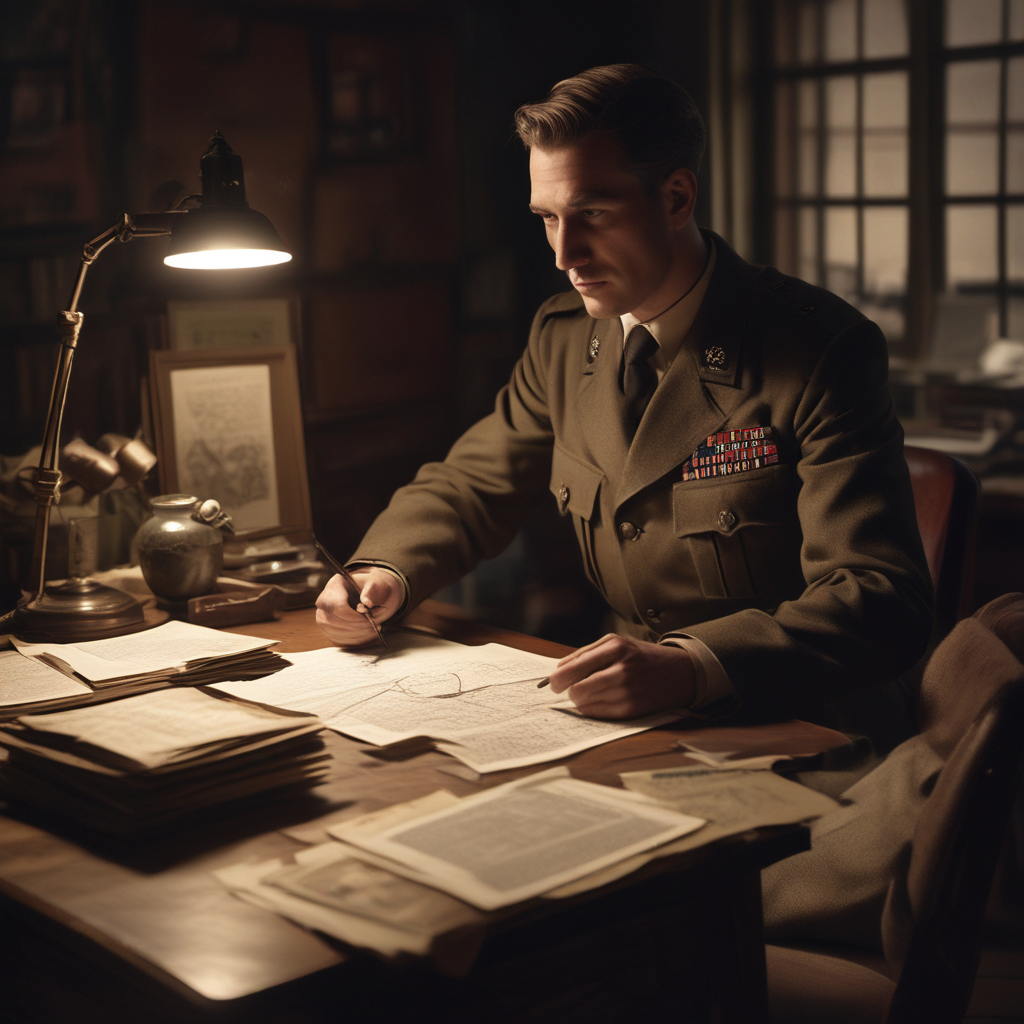
What if a dead body floating in the Mediterranean Sea helped win World War II? Or that a non-existent enemy attack on Los Angeles killed eight Americans? Throughout history, wartime deception operations have determined the fate of nations through elaborate ruses so bizarre they seem like fiction – yet these deadly theatrics saved millions of lives and prevented global catastrophes.
Operation Mincemeat: When Corpses Became Secret Agents
In 1943, British intelligence orchestrated perhaps the most macabre deception in military history. Operation Mincemeat involved dressing a homeless man’s corpse in a Royal Marines uniform, complete with fake identification documents and love letters from a fictional girlfriend named Pam.
The deceased “Major William Martin” carried carefully crafted intelligence suggesting the Allies planned to invade Greece, with Sicily serving as a mere decoy. When Spanish fishermen discovered the body off the coast, German intelligence took the bait completely.
The Devil in the Details
British operatives spent months creating Martin’s entire fictional life:
- Personal effects: Theatre ticket stubs, an overdue bill, and photographs
- Love letters: Romantic correspondence from “Pam” discussing wedding plans
- Professional documents: Official military correspondence about the fake Greek invasion
- Financial records: Bank statements and a receipt for an engagement ring
The operation succeeded spectacularly. German forces reinforced Greece and the Balkans instead of Sicily, allowing Allied forces to establish a crucial foothold in Europe with significantly reduced casualties.
The 1942 Los Angeles False Alarm: When Fear Became Fatal
On February 25, 1942, just months after Pearl Harbor, Los Angeles erupted in panic over a non-existent enemy attack. What began as a false radar reading triggered the most devastating case of friendly fire on American soil during wartime deception operations – though this time, the deception was unintentional.
At 2:25 AM, air raid sirens wailed across the city. Anti-aircraft batteries unleashed over 1,400 rounds of ammunition into the night sky, lighting up Los Angeles like a deadly fireworks display. Searchlights swept frantically overhead while residents huddled in their homes, convinced Japanese bombers were attacking.
The Deadly Consequences of Phantom Enemies
The “Battle of Los Angeles” claimed real victims from an imaginary threat:
- Eight civilian deaths: Heart attacks from stress and car accidents during the blackout
- Property damage: Shrapnel from anti-aircraft shells destroyed homes and businesses
- Mass hysteria: Thousands fled the city, believing invasion was imminent
- Military embarrassment: No enemy aircraft were ever confirmed over Los Angeles
According to historical documentation, the incident revealed how wartime paranoia could transform shadows into enemies and fear into a weapon more dangerous than any bomb.
Stanislav Petrov’s Moment: One Man Prevents Nuclear Armageddon
On September 26, 1983, Soviet Lieutenant Colonel Stanislav Petrov faced the ultimate deception – his own country’s early warning system falsely detected incoming American missiles. In perhaps the most consequential decision in human history, Petrov chose skepticism over protocol, preventing nuclear war through sheer intuition.
The Oko satellite system registered five intercontinental ballistic missiles launching from the United States. Standard procedure demanded immediate retaliation, but Petrov hesitated. Something felt wrong about the alert – why would America launch only five missiles instead of an overwhelming first strike?
The Psychology of Life-or-Death Decisions
Petrov’s reasoning revealed the human element in military deception tactics:
- Logical inconsistency: A real first strike would involve hundreds of missiles, not five
- Technical skepticism: The satellite system was new and potentially unreliable
- Intuitive doubt: The attack pattern didn’t match expected American strategy
- Personal responsibility: Petrov understood the global consequences of his decision
As historical analysis confirms, “His skepticism averted a counterstrike during Cold War tensions. This preserved global peace at a critical moment.”
The Phantom Army That Fooled Hitler
Beyond individual operations, wartime deception operations evolved into elaborate theatrical productions. The First United States Army Group (FUSAG) existed only on paper and in German imagination, yet it convinced Nazi leadership that General George Patton commanded a massive invasion force preparing to attack Calais.
This phantom army included:
- Inflatable tanks and aircraft: Convincing decoys visible to aerial reconnaissance
- Fake radio traffic: Simulated military communications suggesting troop movements
- Double agents: German spies unknowingly fed false information by Allied intelligence
- Patton’s reputation: Using Germany’s respect for the general as psychological leverage
The deception worked perfectly. German forces remained concentrated at Calais while Allied troops landed at Normandy, achieving the element of surprise that proved decisive on D-Day.
Modern Warfare: Digital Deception and Psychological Operations
Today’s wartime deception operations extend beyond physical battlefields into cyberspace and social media. Modern military strategists employ:
Information Warfare Tactics
- Deep fake technology: Creating convincing false videos and audio recordings
- Social media manipulation: Spreading disinformation through coordinated bot networks
- Electronic warfare: Jamming enemy communications while broadcasting false signals
- Psychological profiling: Targeting enemy decision-makers with personalized disinformation
These evolution shows how the fundamental principles discovered in operations like Mincemeat remain relevant, adapted for digital battlefields where truth itself becomes a weapon.
The Thin Line Between Survival and Catastrophe
The legacy of history’s most bizarre wartime deception operations reveals a disturbing truth: the fate of civilizations often hinges on elaborate lies, mistaken identities, and split-second decisions by individuals under enormous pressure. From dead bodies saving thousands of lives to false alarms that killed innocent civilians, these operations demonstrate that in warfare, perception can be more powerful than reality.
Whether preventing nuclear annihilation through healthy skepticism or winning battles with fictional armies, these deceptions remind us that human conflict operates as much in the realm of psychology as physical force. The next time global tensions rise, remember that somewhere, someone might be making a decision based on incomplete information – and the entire world’s future could hang in the balance of their judgment.
Understanding these historical military deception tactics provides crucial insight into how misinformation, whether intentional or accidental, continues to shape our world today. In an era of fake news and digital manipulation, the lessons from Operation Mincemeat and Stanislav Petrov’s courage remain more relevant than ever.
Historical Events
5 Border Changes That Literally Moved Millions Overnight
From Mexico losing half its territory to India’s partition displacing 14 million people – these dramatic border changes reshaped entire continents forever.
Published
2 weeks agoon
February 16, 2026
Imagine going to sleep as a citizen of one country and waking up as a citizen of another – without ever leaving your home. Throughout history, the stroke of a pen on distant treaties has instantly transformed the lives of millions, moved entire populations, and redrawn the very fabric of civilization. These aren’t just lines on maps; they’re seismic shifts that continue to shape our world today.
The Great Land Grab: How America Grew by One-Third in a Single Day
In 1848, the Treaty of Guadalupe Hidalgo accomplished something that sounds impossible: it transferred 525,000 square miles of Mexican territory to the United States in one fell swoop. To put this in perspective, Mexico lost nearly half of its entire landmass, while the US expanded by about one-third.
This massive historical border change didn’t just redraw maps – it instantly created new Americans. According to historical analysis, approximately 80,000 Mexican citizens living in the transferred territories suddenly found themselves with a choice: relocate to Mexico or become American citizens.
The Human Impact of Instant Citizenship
What makes this border change particularly dramatic is how it handled the human element. The treaty guaranteed that former Mexican citizens could:
- Keep their property rights
- Maintain their Catholic faith
- Preserve their Spanish language
- Retain their cultural practices
Yet despite these promises, many faced discrimination and land disputes for generations. This single treaty created the foundation for modern states including California, Nevada, Utah, and parts of Colorado, Arizona, and New Mexico.
When Rulers Drew Straight Lines: The Sykes-Picot Legacy
Perhaps no historical border change has had more lasting consequences than the Sykes-Picot Agreement of 1916. Two men – British diplomat Mark Sykes and French diplomat François Georges-Picot – literally used rulers to draw straight lines across a map of the Ottoman Empire, creating artificial boundaries that ignored centuries of ethnic, religious, and tribal territories.
These arbitrary lines became the borders of modern-day Iraq, Syria, Lebanon, and parts of Turkey and Saudi Arabia. The agreement carved up territories based on European colonial interests rather than the realities of the people living there.
The Price of Ignoring Cultural Boundaries
The consequences of this dramatic border redrawing continue to reverberate today. The straight-line borders:
- Split Kurdish populations across multiple countries
- Combined hostile religious and ethnic groups within single nations
- Created artificial states with no historical basis
- Established boundaries that fuel modern Middle Eastern conflicts
Modern experts argue that many current regional tensions can be traced directly back to these hastily drawn colonial borders.
Modern Border Engineering: The Iraq-Jordan Line
Historical border changes didn’t end with the colonial era. As recently as 1984, Iraq and Jordan revised their shared border to create something remarkably artificial: a boundary consisting of exactly six straight lines.
This modern example demonstrates how countries continue to reshape their boundaries through negotiation rather than conquest. The geometric precision of this border reflects contemporary surveying technology and diplomatic efficiency, but it also shows how modern nations still prioritize administrative convenience over natural geographical features.
The Bloodiest Border: India’s Partition
No discussion of dramatic historical border changes can ignore the partition of India in 1947. This single political decision created not one but two new borders, separating Pakistan from India and triggering one of the largest mass migrations in human history.
The numbers are staggering: over 14 million people were displaced as Hindus fled to India and Muslims moved to Pakistan. The hastily drawn borders, created by British lawyer Sir Cyril Radcliffe who had never even visited India, split families, communities, and even individual properties.
When Borders Divide Everything
The partition created bizarre situations where:
- Railway stations ended up in one country while their rail lines ran through another
- Irrigation systems were divided between nations
- Families found themselves on opposite sides of international borders
- Ancient cultural centers were severed from their surrounding regions
The violence that followed claimed between 200,000 and 2 million lives, making this one of the most costly border changes in human history.
The Northern Line: America and Canada Find Their Boundary
Not all historical border changes involve conflict. The Oregon Treaty of 1846 established the 49th parallel as the permanent US-Canada border through diplomatic negotiation rather than warfare. This agreement became permanent when British Columbia joined Canada in 1871.
This border demonstrates how geographical features and political compromise can create lasting, peaceful boundaries. The 49th parallel became one of the world’s longest undefended borders, stretching over 3,000 miles and symbolizing successful international cooperation.
The Continuing Legacy of Redrawn Maps
These historical border changes reveal a crucial truth: the lines on our maps aren’t permanent fixtures but rather the results of specific political moments, military conflicts, and diplomatic negotiations. From the Treaty of Guadalupe Hidalgo reshaping North America to the partition of India creating new nations overnight, these boundary shifts demonstrate how geography serves politics rather than the other way around.
Understanding these dramatic transformations helps explain modern conflicts, cultural tensions, and the artificial nature of many international boundaries. The borders we take for granted today are actually the products of specific historical moments when powerful people decided to redraw the world – often with consequences that continue to shape millions of lives generations later.


Trending

 Global News2 months ago
Hidden Economic Warfare: How Climate Deals Secretly Control Global Trade
 Historical Figures3 months ago
7 Anonymous Heroes Who Changed History Forever – 3 Will Shock You

 Art & Design3 months ago
Ancient Potters’ 3,500-Year-Old Chemistry Secret That Still Baffles Scientists
 Art & Design3 months ago
Scientists Just Discovered What Renaissance Artists Knew All Along – It Changes Everything

 Fun Facts3 months ago
Scientists Just Discovered Space Isn’t Silent – The Sounds Will Shock You
 News & World3 months ago
Urban Explorers’ Most Terrifying Encounters in ‘Empty’ Buildings
 Global News4 months ago
Undefined Behavior Programming: The Hidden Digital Threat
 Historical Figures3 months ago
7 Unknown Historical Figures Who Secretly Changed the World