
History
9 Everyday Miracles Born from Epic Failures That Changed Everything
From melted candy bars to moldy petri dishes, these accidental inventions transformed our world. The stories behind these life-changing mistakes will amaze you.

Published
3 months agoon

What if I told you that a melted candy bar in someone’s pocket led to revolutionizing how we cook food? Or that leaving a laboratory window open accidentally gave us one of the most life-saving medicines in human history? Some of humanity’s greatest breakthroughs didn’t come from brilliant planning or years of research – they came from complete, often embarrassing mistakes.
These accidental inventions prove that serendipity often trumps strategy. While scientists and inventors worked tirelessly on their intended projects, the universe had other plans. The results? Technologies that now generate hundreds of billions in revenue and have saved millions of lives worldwide.
The Medical Miracles That Started as Lab Accidents
Medicine’s greatest breakthroughs often came from the most unexpected moments, transforming what seemed like laboratory failures into life-saving discoveries.
Penicillin: The Mold That Saved Millions
In 1928, Scottish bacteriologist Alexander Fleming was having a particularly messy week in his laboratory. Before leaving for vacation, he carelessly left several bacteria-filled petri dishes stacked in his sink, with one lid accidentally left ajar. When he returned, Fleming noticed something peculiar – a strange mold had contaminated one dish, but more importantly, it had killed all the bacteria around it.
What Fleming discovered was penicillin, which would become the world’s first true antibiotic. This accidental discovery has since saved an estimated 200 million lives, making Fleming’s careless laboratory habits one of history’s most fortunate mistakes.
X-Rays: Seeing Through the Impossible
German physicist Wilhelm Conrad Röntgen was experimenting with cathode rays in 1895 when he noticed something extraordinary. A fluorescent screen across his laboratory began glowing, even though his cathode ray tube was completely covered in black cardboard. While investigating this mysterious phenomenon, Röntgen placed his hand between the tube and the screen – and saw the bones of his own hand projected on the screen.
This accidental discovery of X-rays revolutionized medicine, allowing doctors to see inside the human body without surgery for the first time in history.
The Kitchen Revolution from a Sweet Mistake
Our modern kitchens owe much to a candy bar and an engineer’s curious mind, proving that the most transformative accidental inventions often happen in the most mundane moments.
The Microwave: When Radar Met Chocolate
Percy Spencer was a self-taught engineer working on military radar technology in the 1940s when he experienced what many would consider a wardrobe malfunction. While testing a new magnetron, the chocolate bar in his pocket completely melted. Instead of being annoyed, Spencer was intrigued.
He began experimenting with other foods – popcorn kernels popped, an egg exploded. Within months, Spencer had developed the first microwave oven, initially called the “Radarange.” Today, over 90% of American homes contain this accidental invention that started with a messy pants pocket.
Everyday Conveniences Born from Frustration
Some of our most commonly used items exist because inventors were trying to solve completely different problems, only to stumble upon solutions that changed daily life forever.
Velcro: A Dog Walk That Stuck
Swiss engineer George De Mestral was removing annoying cockleburs from his dog’s fur after a hunting trip in 1941 when curiosity struck. Under a microscope, he discovered the plant’s ingenious design – tiny hooks that grabbed onto anything with loops. This observation sparked an idea that would take over a decade to perfect.
De Mestral spent 10 years developing Velcro, facing rejection from manufacturers who thought his “zipperless zipper” was ridiculous. Today, Velcro generates hundreds of millions in annual revenue and has applications from children’s shoes to space suits.
Post-it Notes: The Weak Glue That Stuck Around
3M scientist Spencer Silver was trying to create the world’s strongest adhesive in 1968 when he accidentally developed the world’s weakest one instead. His glue could stick to surfaces but could be easily removed without damage. For years, it was considered a useless failure.
It wasn’t until 1974 that Silver’s colleague, Art Fry, found the perfect application while struggling with bookmark problems in his church hymnal. Those removable, repositionable notes became Post-it Notes, now one of the most recognizable office supplies globally.
Ancient Accidents That Shaped History
The phenomenon of accidental discoveries spans centuries, proving that human curiosity combined with unexpected results has always been a powerful force for innovation.
Gunpowder: The Immortality Quest That Exploded
Chinese alchemists in the 9th century were obsessed with finding the elixir of life – a magical potion that would grant immortality. While mixing sulfur, charcoal, and saltpeter in various combinations, they instead discovered something that would change warfare forever: gunpowder.
This accidental invention revolutionized military strategy and eventually led to the development of firearms, cannons, and modern explosives. Ironically, their quest for eternal life created one of history’s most deadly innovations.
The Science Behind Serendipitous Success
What makes accidental inventions so powerful isn’t just luck – it’s the combination of preparation, observation, and the wisdom to recognize opportunity in unexpected moments.
These discoveries share common patterns:
- Prepared minds: All inventors had deep knowledge in their fields
- Careful observation: They noticed when something unusual happened
- Persistent development: Most took years to perfect after the initial accident
- Practical applications: They could envision real-world uses for their discoveries
As experts note, “Necessity isn’t always the mother of invention – sometimes it’s serendipity.” This wisdom reminds us that breakthrough innovations often come from staying curious about the unexpected.
These accidental heroes prove that some of humanity’s greatest achievements came not from meticulous planning, but from the courage to explore the unexplained. Their stories remind us that in our own lives, what we perceive as failures or accidents might actually be opportunities waiting to be recognized. The next time something doesn’t go according to plan, remember Percy Spencer’s melted chocolate bar – your mistake might just change the world.


You may like


Why Your City’s Name Isn’t What You Think – The Hidden Truth Revealed


Ancient Persia’s Secret Weapon That Built History’s First Superpower


Why Medieval People Were Actually Smarter Than You Think


What Drinking Water at the Wrong Time Does to Your Brain Is Shocking

The Forgotten Story of Human Computers That Changed Everything


Hidden Underground Cities Beneath Major Cities Will Leave You Speechless
History
4 Accidental Inventions Born From Love, Laziness & Lucky Mistakes
From rubber gloves invented for love to dishwashers born from frustration – discover how accidental inventions changed the world forever.
Published
2 weeks agoon
February 19, 2026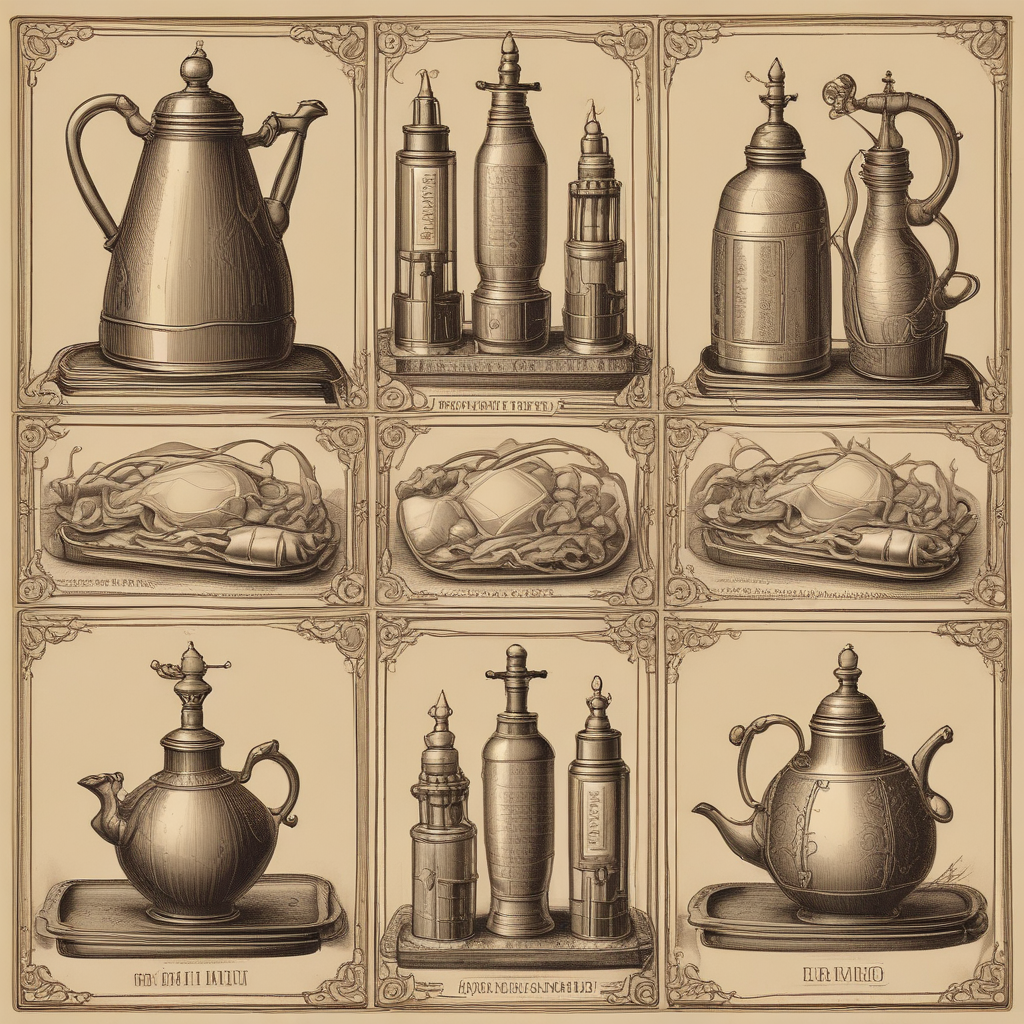
When surgeon William Halsted noticed his nurse Caroline Hampton’s hands were becoming raw and irritated from harsh medical chemicals in 1889, he did something that would revolutionize surgery forever – and win her heart. His simple act of love led to the invention of rubber surgical gloves, saving countless lives and proving that some of humanity’s greatest breakthroughs come from the most unexpected places.
Throughout history, accidental inventions have emerged not from grand corporate laboratories, but from deeply personal moments of frustration, affection, and pure serendipity. These stories challenge everything we think we know about innovation, revealing how human emotions and everyday problems can spark world-changing solutions.
Love-Driven Innovation: When Romance Meets Medical Breakthrough
The story of William Halsted and Caroline Hampton perfectly illustrates how love can be the ultimate catalyst for innovation. In 1889-1890, Hampton worked as Halsted’s surgical nurse at Johns Hopkins Hospital, where her hands were constantly exposed to mercuric chloride antiseptic solutions.
As Hampton’s skin became increasingly damaged from the harsh chemicals, Halsted couldn’t bear to watch her suffer. His solution was both romantic and revolutionary – he commissioned the Goodyear Rubber Company to create thin rubber gloves that would protect her hands during surgery.
- The personal became universal: What started as a gesture of care became standard medical practice worldwide
- Love conquered all: Hampton and Halsted eventually married, making this one of history’s most romantic invention stories
- Lives saved: Rubber gloves have prevented countless infections and medical complications over the past 130+ years
This wasn’t just about solving a workplace problem – it was about one person caring enough about another to innovate. The emotional investment made the difference between accepting the status quo and creating something entirely new.
The Productive Laziness Paradox: Efficiency Born From Frustration
Sometimes the best inventions come from people who are simply tired of doing things the hard way. Josephine Cochrane’s dishwasher invention in 1886 is a perfect example of how frustration can fuel world-changing innovation.
The Breaking Point That Changed Kitchens Forever
Cochrane was a wealthy socialite who loved entertaining guests with her fine china collection. However, she grew increasingly frustrated watching servants chip and break her precious dishes while washing them by hand. Her breaking point came with a now-famous declaration: “If nobody else is going to invent a dishwashing machine, I’ll do it myself!”
What makes Cochrane’s story remarkable isn’t just her determination, but how she transformed personal annoyance into systematic innovation:
- Problem identification: She precisely understood what was breaking her dishes
- Solution design: Created compartments that held dishes securely while water sprayed them clean
- Market expansion: Initially marketed to hotels and restaurants before reaching homes
This pattern of “productive laziness” – the desire to eliminate tedious or problematic tasks – has driven countless accidental inventions throughout history. The key insight is that frustration, when channeled correctly, becomes a powerful motivator for creative problem-solving.
Lucky Observations and Mythical Moments
Not all invention stories are entirely accurate, but they reveal important truths about how innovation actually works. The tale of James Watt and the steam engine perfectly illustrates this phenomenon.
The Kettle That May Never Have Existed
According to popular legend, young James Watt watched steam lifting the lid of his mother’s (or aunt’s) tea kettle and suddenly understood the power of steam pressure. This observation supposedly led to his improvements to the steam engine that powered the Industrial Revolution.
However, historical analysis reveals this story is likely apocryphal – told in many contradictory versions with different details, locations, and even different relatives. Yet the myth persists because it captures something essential about the innovation process:
- Observation matters: Real breakthroughs often come from noticing what others ignore
- Everyday inspiration: Revolutionary ideas can emerge from mundane experiences
- Pattern recognition: Innovation requires connecting seemingly unrelated phenomena
Whether Watt’s kettle story is true or not, it represents the universal truth that accidental discoveries often begin with paying attention to the world around us in new ways.
Workplace Frustration as Innovation Fuel
The office environment has been a particularly fertile ground for accidental inventions. Bette Nesmith Graham’s correction fluid invention in 1956 demonstrates how workplace frustration can lead to global solutions.
As a secretary struggling with typing mistakes, Graham grew tired of having to retype entire pages because of small errors. Her solution was elegantly simple: she mixed white paint with other ingredients to create what would become Liquid Paper correction fluid.
From Personal Pain Point to Global Product
Graham’s journey from frustrated secretary to successful entrepreneur illustrates several key principles of accidental innovation:
- Universal problems create universal markets: Her typing struggles were shared by millions
- Simple solutions can be revolutionary: The concept was straightforward but transformative
- Persistence pays off: She continued refining her formula despite initial skepticism
Her story also highlights how women inventors have often emerged from domestic or workplace situations where they identified problems others overlooked or accepted as unchangeable.
Modern Implications: Democratizing Innovation
These historical examples of accidental inventions offer crucial insights for today’s innovators and entrepreneurs. In an era dominated by systematic R&D and corporate innovation labs, these stories remind us that breakthrough solutions can still emerge from unexpected places.
Key Lessons for Modern Innovators
The patterns revealed in these invention stories suggest several strategies for fostering accidental innovation:
- Embrace emotional investment: Problems that personally frustrate or concern you are more likely to receive the sustained attention needed for breakthrough solutions
- Question accepted inefficiencies: What seems “just the way things are” might actually be a hidden opportunity
- Pay attention to anomalies: Unexpected observations or failures often contain the seeds of new discoveries
- Think beyond your immediate problem: Solutions that work for you might work for millions of others
The democratization of innovation tools – from 3D printing to crowdfunding platforms – means that individual inventors facing personal problems have more opportunities than ever to create and distribute solutions globally.
The Continuing Power of Human-Centered Innovation
As artificial intelligence and automated research reshape the innovation landscape, the stories of accidental inventions remind us that human experience, emotion, and observation remain irreplaceable sources of breakthrough thinking.
The rubber gloves that protected Caroline Hampton’s hands now protect healthcare workers worldwide. The dishwasher born from Josephine Cochrane’s frustration now saves countless hours of manual labor. These inventions succeeded not because they were planned by committees or predicted by market research, but because they solved real human problems experienced by real people.
In our quest for systematic innovation, we must remember that the next world-changing invention might be sitting right in front of us, waiting for someone to get frustrated enough, care deeply enough, or pay attention closely enough to see the solution that’s been hiding in plain sight all along. The greatest accidental discoveries often come from the most human of motivations – love, laziness, and the simple desire to make life a little bit better.
Historical Events
94-Year Scientific Experiment That Nobody Has Ever Witnessed Live
For 94 years, only 9 drops have fallen in this famous experiment, yet no human has ever seen one drop live. The bizarre reason will amaze you.
Published
2 weeks agoon
February 19, 2026
Imagine waiting 94 years to see something happen, only to miss it by mere minutes every single time. This is the maddening reality of the longest running experiment in scientific history – one that has captivated the world precisely because almost nobody has actually witnessed what it’s designed to demonstrate.
The Setup That Started a Century-Long Wait
In 1927, Professor Thomas Parnell at the University of Queensland had a simple goal: show his students that some substances aren’t what they appear to be. He heated a sample of pitch – a tar-like substance derived from organic materials – and poured it into a glass funnel. After letting it settle for three years, he cut the funnel’s stem in 1930, creating what would become the world’s most patient scientific demonstration.
What Parnell created was more than just a classroom tool. He established a longest scientific experiment that would outlive him, survive two world wars, and continue captivating audiences nearly a century later. The pitch, which appears completely solid and can shatter like glass when struck with a hammer, is actually flowing like an extremely viscous liquid.
The Mind-Bending Physics Behind Pitch
To understand why this experiment takes so long, consider this: pitch has a viscosity approximately 100 billion times greater than water. To put this in perspective, it’s 2.3 million times more viscous than honey. This extraordinary thickness means that while pitch does flow, it does so at a pace that makes glacial movement seem lightning-fast.
According to research published in the journal Nature, this viscosity demonstrates the concept of non-Newtonian fluids – substances that don’t behave according to our everyday understanding of liquid versus solid states.
The Maddening Game of Near Misses
Here’s where the University of Queensland experiment becomes almost mythical: in 94 years, only nine drops have fallen, with each drop taking approximately 8-12 years to complete its journey. Yet despite continuous monitoring, modern technology, and global attention, not a single human being has ever witnessed a drop actually falling.
Famous Near Misses That Became Legend
- Professor Parnell himself never saw a drop fall before his death
- His successor missed the second drop by minutes while attending a lecture
- The seventh drop fell in 2000 during a brief camera malfunction
- The eighth drop occurred on a weekend when nobody was watching the live feed
- Multiple attempts with 24/7 webcam monitoring still haven’t captured the moment
The Science Alert reports that this pattern of near-misses has created an almost supernatural quality around the experiment, leading some to jokingly call it “cursed.”
Modern Technology Meets Ancient Patience
Today’s pitch drop experiment represents a fascinating collision between cutting-edge technology and old-fashioned scientific patience. The University of Queensland has equipped the experiment with high-definition cameras, time-lapse photography, and live streaming capabilities that allow millions of viewers worldwide to watch the slow-motion drama unfold.
Despite these technological advances, the experiment continues to elude direct observation. The University of Queensland’s official documentation shows that drops tend to fall at the most inconvenient moments – during system maintenance, power outages, or when attention is momentarily diverted elsewhere.
The Global Audience for Slow Science
What started as a simple classroom demonstration now attracts viewers from around the world. The live webcam feed has become an unlikely internet sensation, with people checking in regularly to see if they might be the first to witness the historic moment. Social media communities have formed around the experiment, sharing predictions and theories about when the next drop might fall.
The Science Behind the Slowness
The slowest experiment ever teaches us profound lessons about the nature of matter and time. Materials scientists explain that pitch exists in a state that challenges our binary thinking about solid versus liquid. At room temperature, pitch behaves like a solid – you can break it with a hammer. But given enough time, it demonstrates its true liquid nature.
This phenomenon occurs because pitch is what scientists call a “supercooled liquid.” Its molecules want to flow, but they do so incredibly slowly due to the substance’s complex molecular structure. Research from Physical Review Letters shows that understanding such materials has applications in everything from manufacturing to geology.
Real-World Applications of Extreme Viscosity
While the pitch drop experiment might seem purely academic, studying extreme viscosity has practical applications:
- Understanding how glass flows over centuries in old buildings
- Developing new materials for aerospace and automotive industries
- Improving our knowledge of geological processes like lava flows
- Creating better models for how substances behave over extended timeframes
Recognition and Legacy
In 2005, the experiment received the Ig Nobel Prize for Physics – an award that recognizes research that “first makes people laugh, then makes them think.” This recognition highlighted how the experiment perfectly embodies the unexpected side of scientific inquiry.
The experiment’s legacy extends far beyond its scientific value. It has become a meditation on patience, persistence, and the nature of time itself. In our age of instant gratification and rapid technological change, the pitch drop experiment serves as a powerful reminder that some truths can only be revealed through extraordinary patience.
What the Future Holds
Scientists estimate that the remaining pitch in the funnel contains enough material for approximately 100 more drops over the next 1,000 years. This means the experiment will likely continue long after everyone currently alive has passed away, creating a bridge between current and future scientific generations.
The ninth drop is currently forming and could fall at any moment – or it could take several more years. The unpredictability is part of what makes the experiment so compelling. As noted by Smithsonian Magazine, this uncertainty transforms a simple physics demonstration into a global guessing game.
Why This ‘Boring’ Experiment Captivates the World
The paradox of the longest running experiment is that it has become famous for what hasn’t been seen rather than what has been observed. In a world where we can watch events unfold in real-time from anywhere on Earth, there remains this one phenomenon that consistently eludes our gaze.
Perhaps the experiment’s appeal lies in its reminder that nature operates on its own timeline, indifferent to human schedules and expectations. It challenges our need for immediate results and forces us to consider processes that unfold over decades rather than seconds.
The pitch drop experiment ultimately teaches us that some of the most profound scientific truths require not just intelligence or technology, but something increasingly rare in our modern world: the willingness to wait, watch, and wonder. Whether anyone will ever witness that next drop fall live remains one of science’s most tantalizing mysteries – and perhaps that’s exactly as it should be.
Historical Figures
5 Mathematical Geniuses Who Shocked the World Without Formal Training
Discover how self-taught mathematicians like Ramanujan revolutionized mathematics despite zero formal education. Their legendary rivalries changed history forever.
Published
2 weeks agoon
February 19, 2026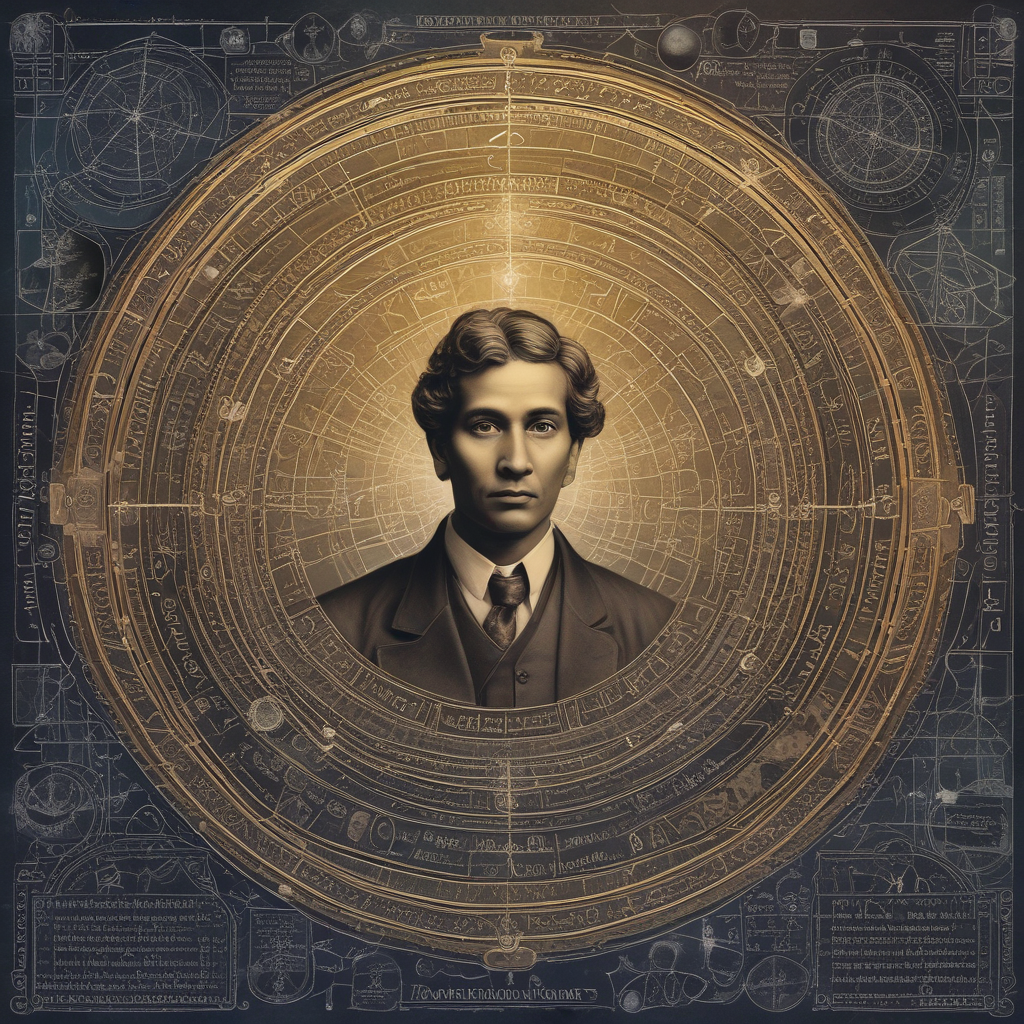
Imagine mastering the most complex mathematical theories without ever setting foot in a university classroom. While most of us struggle with basic algebra, some of history’s greatest minds revolutionized entire fields of mathematics through pure intuition and relentless curiosity. These famous mathematicians in history didn’t just break the rules – they rewrote them entirely.
The Self-Taught Prodigy Who Amazed Cambridge Professors
In 1913, professors at Cambridge University received a letter from an unknown clerk in colonial India. The sender, Srinivasa Ramanujan, had filled three pages with mathematical formulas so advanced that they seemed impossible. Many appeared to defy known mathematical principles, yet when examined closely, they revealed profound truths about numbers that wouldn’t be fully understood for decades.
Ramanujan had almost no formal training in pure mathematics. Working in isolation in Madras, he developed theories about infinite series, number theory, and continued fractions that left Cambridge’s finest mathematicians speechless. Professor G.H. Hardy later called discovering Ramanujan “the one romantic incident in my life.”
The Miraculous Mathematical Intuition
What made Ramanujan extraordinary wasn’t just his lack of formal education – it was how he seemed to understand mathematical truths through pure intuition. He claimed his family goddess, Namagiri, would appear in his dreams and show him mathematical formulas. When he woke up, he would verify them mathematically.
- Developed over 3,900 mathematical results and identities
- Made substantial contributions to mathematical analysis and number theory
- His notebooks continue to inspire new mathematical discoveries today
- Worked as a clerk earning 20 rupees per month while making breakthrough discoveries
Modern mathematicians are still working to fully understand and prove many of Ramanujan’s original formulas and theories.
The Mathematical Machine Who Calculated Like Breathing
If Ramanujan was mathematical intuition personified, then Leonhard Euler was pure computational power. This 18th-century Swiss mathematician was so prolific that mathematician François Arago said he “calculated without any apparent effort, just as men breathe and as eagles sustain themselves in air.”
Euler’s output was staggering – he produced nearly 900 books and papers during his lifetime, averaging one mathematical paper every seven weeks for his entire adult life. Even after losing sight in his right eye, and later becoming almost completely blind, his productivity actually increased.
The Numbers Behind the Genius
Euler’s mathematical legacy includes contributions to virtually every area of mathematics known in his time:
- Graph Theory: Solved the famous Seven Bridges of Königsberg problem
- Calculus: Developed much of the notation we still use today
- Number Theory: Made breakthrough discoveries about prime numbers
- Physics: Applied mathematics to mechanics, optics, and astronomy
John von Neumann, himself a mathematical genius, called Euler “the greatest virtuoso of the period.” Even today, Euler’s mathematical innovations form the foundation of modern engineering and physics.
The Legendary Rivalry That Accelerated Human Knowledge
Sometimes the greatest mathematical advances come not from collaboration, but from fierce competition. The rivalry between Isaac Newton and Gottfried Wilhelm Leibniz over who invented calculus became one of history’s most famous intellectual disputes – and it revolutionized mathematics forever.
Both men developed calculus independently, but Newton had developed his version years earlier while working on problems of motion and gravity. When Leibniz published his version first, it sparked a controversy that divided the mathematical community across national lines.
How Rivalry Drove Innovation
This mathematical feud, known as the “Leibniz-Newton calculus controversy,” actually benefited mathematics:
- Forced both mathematicians to refine and perfect their methods
- Led to clearer explanations and better notation systems
- Encouraged other mathematicians to choose sides and advance the field
- Established calculus as the foundation of modern physics and engineering
While the personal animosity lasted for decades, Newton’s and Leibniz’s competing approaches gave us the mathematical tools needed for everything from space exploration to computer graphics.
The Ancient Genius Who Was 1,700 Years Ahead of His Time
When Carl Gauss, often called the “Prince of Mathematics,” considered the greatest mathematical minds in history, he identified only three as truly “epoch-making”: Archimedes, Newton, and Eisenstein. At the top of this list stood Archimedes, a man so advanced that his work wouldn’t be fully appreciated for nearly two millennia.
Philosopher Alfred North Whitehead made a stunning observation: “In the year 1500 Europe knew less than Archimedes who died in the year 212 BC.” This ancient Greek mathematician had developed concepts that wouldn’t be rediscovered until the Renaissance.
The Timeless Mathematical Legacy
Archimedes’ contributions went far beyond his famous “Eureka!” moment in the bathtub:
- Calculated pi to remarkable accuracy using geometric methods
- Developed early versions of calculus concepts 2,000 years before Newton
- Created the field of hydrostatics and principles of buoyancy
- Designed war machines that defended Syracuse against Roman invasion
Historian Reviel Netz called Archimedes “the most important scientist who ever lived,” arguing that “Western science is but a series of footnotes to Archimedes.” Modern mathematicians studying Archimedes’ original works continue to find sophisticated mathematical techniques that weren’t formally “discovered” until centuries later.
The Interconnected Chain of Mathematical Genius
What’s remarkable about these greatest mathematicians of all time is how their work built upon each other across centuries and continents. Gauss revered Archimedes, Newton built on ancient geometric principles, and Euler extended Newton’s calculus. Even Ramanujan, working in isolation, was unknowingly following paths first explored by European mathematicians centuries earlier.
This interconnected genius network shows us that mathematical breakthrough isn’t just about individual brilliance – it’s about how exceptional minds can transcend the limitations of their time, education, and circumstances to push human understanding forward.
Modern Lessons from Mathematical Masters
These mathematical legends teach us that genius comes in many forms:
- Intuitive genius: Like Ramanujan’s mystical mathematical insights
- Systematic genius: Like Euler’s methodical exploration of every mathematical frontier
- Competitive genius: Like the Newton-Leibniz rivalry that drove both to excellence
- Timeless genius: Like Archimedes’ work that transcended historical periods
Today’s mathematicians continue building on foundations laid by these giants, using mathematical principles and methods developed across millennia.
From self-taught prodigies in colonial India to blind mathematicians calculating at superhuman speeds, these famous mathematicians in history prove that human genius knows no boundaries. Their legacies remind us that the most profound discoveries often come from those willing to see the world differently – whether through formal training, pure intuition, or relentless curiosity. In our age of artificial intelligence and quantum computing, we still rely on insights first glimpsed by minds that dared to imagine the impossible.


Trending

 Global News2 months ago
Hidden Economic Warfare: How Climate Deals Secretly Control Global Trade

 Historical Figures3 months ago
7 Anonymous Heroes Who Changed History Forever – 3 Will Shock You

 Art & Design3 months ago
Ancient Potters’ 3,500-Year-Old Chemistry Secret That Still Baffles Scientists
 Art & Design3 months ago
Scientists Just Discovered What Renaissance Artists Knew All Along – It Changes Everything

 Fun Facts3 months ago
Scientists Just Discovered Space Isn’t Silent – The Sounds Will Shock You

 News & World3 months ago
Urban Explorers’ Most Terrifying Encounters in ‘Empty’ Buildings

 Global News4 months ago
Undefined Behavior Programming: The Hidden Digital Threat

 Historical Figures3 months ago
7 Unknown Historical Figures Who Secretly Changed the World