
Historical Figures
9 Secret Societies That Shaped America’s Founding Documents Forever
At least 9 Declaration signers were Freemasons, but that’s just the beginning. Discover the hidden organizations that secretly influenced history’s most powerful leaders.

Published
3 months agoon
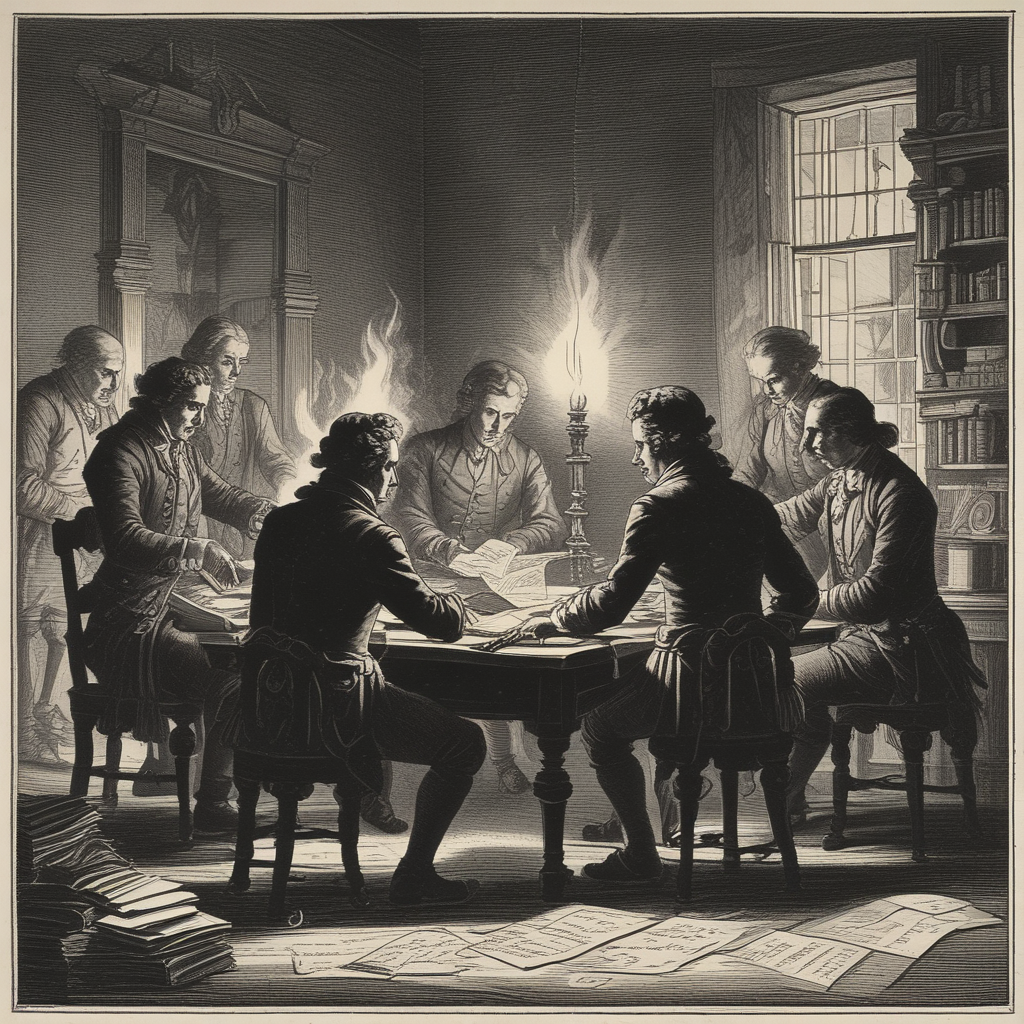
What if everything you thought you knew about America’s founding was missing a crucial piece? At least nine signers of the Declaration of Independence and thirteen signers of the Constitution were confirmed Freemasons – members of history’s most influential secret society. But the Freemasons were just one of many shadowy organizations that have quietly shaped world events from behind closed doors.
From America’s founding fathers to Hawaii’s century-old power brokers, secret societies and hidden organizations have operated as invisible networks of influence, connecting the world’s most powerful figures across generations. These aren’t conspiracy theories – they’re documented historical facts about how elite groups have used secrecy, exclusivity, and brotherhood to accumulate power that often exceeds official government channels.
The Masonic Foundation of American Democracy
When you examine the signatures on America’s most sacred documents, a pattern emerges that history textbooks rarely emphasize. The Freemasons didn’t just participate in the American Revolution – they architected it. These lodge brothers used their secret networks to coordinate revolutionary activities and later crafted the philosophical foundations of American democracy.
The Founding Fathers’ Secret Brotherhood
The influence of Freemasonry on American founding goes far beyond simple membership numbers. These men shared:
- Common philosophical principles about individual liberty and natural rights
- Established networks of trust that facilitated coordination across colonies
- Ritualistic bonds that transcended political disagreements
- Shared symbols and language that appear throughout early American documents
Notable Freemason founding fathers included George Washington, Benjamin Franklin, and Paul Revere, whose lodge meetings often doubled as revolutionary planning sessions. According to historical records, these men used Masonic principles of brotherhood and secrecy to build the trust networks essential for orchestrating rebellion against the British Crown.
Beyond the Lodge: Hidden Power Networks Across the Globe
While Freemasonry dominated American founding circles, other secret societies wielded equally impressive influence in different corners of the world. Elite secret societies consistently attract high-income and socially influential people who use these exclusive platforms to shape political and economic decisions.
Hawaii’s Century-Old Secret: The Social Science Association
On a remote Pacific island chain, one of America’s most enduring yet unknown power networks has operated continuously for over 140 years. The Honolulu Social Science Association was formed by 10 individuals who were ‘hand picked as leaders of opinion’ with the explicit goal of promoting intellectual and social advancement within Hawaii’s elite circles.
Historical records reveal that this organization has maintained influence through Hawaii’s territorial period, statehood, and modern development. Members have included:
- Territorial governors and state politicians
- Sugar plantation magnates and business leaders
- Federal judges and legal authorities
- University presidents and intellectual figures
The association’s longevity demonstrates how secret societies create institutional power that transcends individual careers, allowing influence to compound across generations.
The Universal Patterns of Secret Power
Whether examining American Freemasons or Hawaiian civic associations, certain behavioral patterns emerge consistently across secret societies throughout history. These organizations share common characteristics that explain their enduring influence and appeal.
The Paradox of ‘Secret’ Documentation
Intelligence historian Richard Spence notes that secret societies have a frequent tendency toward claiming origins older than can be reliably documented, yet many supposedly secret organizations maintain extensive historical records and known membership lists. This paradox reveals how secrecy often functions more as exclusivity than actual concealment.
Factionalism and Internal Power Struggles
Secret societies consistently experience internal divisions that mirror larger political conflicts. Key patterns include:
- Generational splits between founding principles and evolving membership
- Geographic factionalism as organizations expand beyond original locations
- Ideological evolution from revolutionary tools to establishment institutions
- Competition for leadership positions and influence within the organization
These internal tensions often reflect broader social changes, making secret societies both shapers and products of their historical moments.
From Revolutionary Tools to Elite Establishments
Perhaps the most fascinating aspect of secret societies is their tendency to evolve from challenging existing power structures to becoming integral parts of the establishment they once opposed. The American Freemasons exemplify this transformation perfectly.
The Revolutionary Phase
During the colonial period, Masonic lodges served as revolutionary cells where members could safely discuss treasonous ideas about independence and self-governance. The secrecy provided protection from British authorities while the brotherhood created trust networks essential for coordinated resistance.
The Institutional Phase
After American independence, these same Masonic networks became foundational to the new establishment. Former revolutionaries used their secret society connections to:
- Staff government positions with trusted brotherhood members
- Establish business partnerships based on lodge relationships
- Create educational institutions reflecting Masonic philosophical principles
- Build social hierarchies that privileged insider access
Historical analysis shows this pattern repeating globally, as revolutionary secret societies transform into conservative institutions protecting the status quo they helped create.
Modern Legacy: The Continuing Influence of Historical Networks
The secret societies that shaped historical events didn’t simply disappear – they evolved, adapted, and in many cases, continue operating today. Understanding their historical impact helps explain contemporary power structures and influence networks that remain largely invisible to public scrutiny.
Contemporary Manifestations
Modern equivalents of historical secret societies include:
- Economic forums like the World Economic Forum that bring together global elites
- Academic societies that control access to prestigious universities and research positions
- Professional associations that regulate entry into influential careers
- Social clubs that maintain exclusivity while facilitating powerful connections
These contemporary organizations operate with less secrecy but maintain the same fundamental appeal: exclusive access to influential networks that provide advantages unavailable to non-members.
The Digital Age Challenge
Modern technology has complicated traditional secret society operations by making secrecy more difficult to maintain while simultaneously creating new opportunities for discrete communication and coordination. Academic research suggests that contemporary elite organizations focus more on exclusivity and networking than actual secrecy, adapting their methods while preserving their core function as power-concentrating institutions.
The Enduring Appeal of Hidden Influence
The historical impact of secret societies and hidden organizations reveals fundamental truths about how power actually operates in democratic societies. From the Freemason founding fathers who shaped American democracy to Hawaii’s Social Science Association members who guided Pacific development, these groups demonstrate that informal networks often wield more lasting influence than official institutions.
Understanding this hidden history doesn’t diminish the achievements of great historical figures – it reveals the collaborative networks that made their individual success possible. The secret societies that shaped our world remind us that behind every transformative moment in history, there were likely dedicated groups of connected individuals working together toward shared goals, using the power of brotherhood, secrecy, and exclusive access to change the course of human events.
Perhaps most importantly, recognizing these patterns helps us better understand contemporary power structures and ask crucial questions about who really shapes the decisions that affect our daily lives. The legacy of historical secret societies lives on in modern networks that continue to demonstrate the enduring appeal and effectiveness of organized, exclusive influence in democratic societies.


You may like

Why Your City’s Name Isn’t What You Think – The Hidden Truth Revealed


Ancient Persia’s Secret Weapon That Built History’s First Superpower


Why Medieval People Were Actually Smarter Than You Think


The Forgotten Story of Human Computers That Changed Everything


Ancient Alchemists’ Pottery Secret That Modern Science Finally Decoded

Two Medieval Kings Drew Lines on Blank Maps and Changed History Forever
Historical Figures
5 Mathematical Geniuses Who Shocked the World Without Formal Training
Discover how self-taught mathematicians like Ramanujan revolutionized mathematics despite zero formal education. Their legendary rivalries changed history forever.
Published
2 weeks agoon
February 19, 2026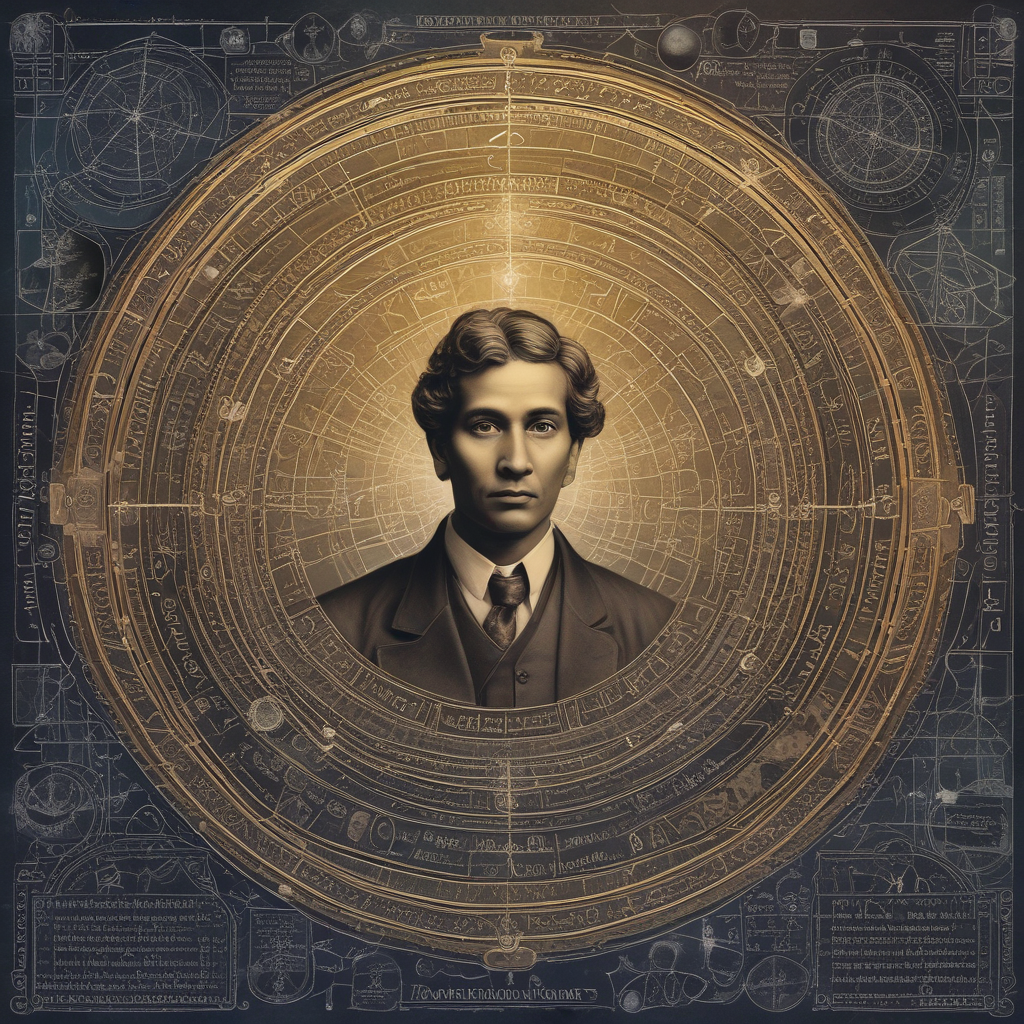
Imagine mastering the most complex mathematical theories without ever setting foot in a university classroom. While most of us struggle with basic algebra, some of history’s greatest minds revolutionized entire fields of mathematics through pure intuition and relentless curiosity. These famous mathematicians in history didn’t just break the rules – they rewrote them entirely.
The Self-Taught Prodigy Who Amazed Cambridge Professors
In 1913, professors at Cambridge University received a letter from an unknown clerk in colonial India. The sender, Srinivasa Ramanujan, had filled three pages with mathematical formulas so advanced that they seemed impossible. Many appeared to defy known mathematical principles, yet when examined closely, they revealed profound truths about numbers that wouldn’t be fully understood for decades.
Ramanujan had almost no formal training in pure mathematics. Working in isolation in Madras, he developed theories about infinite series, number theory, and continued fractions that left Cambridge’s finest mathematicians speechless. Professor G.H. Hardy later called discovering Ramanujan “the one romantic incident in my life.”
The Miraculous Mathematical Intuition
What made Ramanujan extraordinary wasn’t just his lack of formal education – it was how he seemed to understand mathematical truths through pure intuition. He claimed his family goddess, Namagiri, would appear in his dreams and show him mathematical formulas. When he woke up, he would verify them mathematically.
- Developed over 3,900 mathematical results and identities
- Made substantial contributions to mathematical analysis and number theory
- His notebooks continue to inspire new mathematical discoveries today
- Worked as a clerk earning 20 rupees per month while making breakthrough discoveries
Modern mathematicians are still working to fully understand and prove many of Ramanujan’s original formulas and theories.
The Mathematical Machine Who Calculated Like Breathing
If Ramanujan was mathematical intuition personified, then Leonhard Euler was pure computational power. This 18th-century Swiss mathematician was so prolific that mathematician François Arago said he “calculated without any apparent effort, just as men breathe and as eagles sustain themselves in air.”
Euler’s output was staggering – he produced nearly 900 books and papers during his lifetime, averaging one mathematical paper every seven weeks for his entire adult life. Even after losing sight in his right eye, and later becoming almost completely blind, his productivity actually increased.
The Numbers Behind the Genius
Euler’s mathematical legacy includes contributions to virtually every area of mathematics known in his time:
- Graph Theory: Solved the famous Seven Bridges of Königsberg problem
- Calculus: Developed much of the notation we still use today
- Number Theory: Made breakthrough discoveries about prime numbers
- Physics: Applied mathematics to mechanics, optics, and astronomy
John von Neumann, himself a mathematical genius, called Euler “the greatest virtuoso of the period.” Even today, Euler’s mathematical innovations form the foundation of modern engineering and physics.
The Legendary Rivalry That Accelerated Human Knowledge
Sometimes the greatest mathematical advances come not from collaboration, but from fierce competition. The rivalry between Isaac Newton and Gottfried Wilhelm Leibniz over who invented calculus became one of history’s most famous intellectual disputes – and it revolutionized mathematics forever.
Both men developed calculus independently, but Newton had developed his version years earlier while working on problems of motion and gravity. When Leibniz published his version first, it sparked a controversy that divided the mathematical community across national lines.
How Rivalry Drove Innovation
This mathematical feud, known as the “Leibniz-Newton calculus controversy,” actually benefited mathematics:
- Forced both mathematicians to refine and perfect their methods
- Led to clearer explanations and better notation systems
- Encouraged other mathematicians to choose sides and advance the field
- Established calculus as the foundation of modern physics and engineering
While the personal animosity lasted for decades, Newton’s and Leibniz’s competing approaches gave us the mathematical tools needed for everything from space exploration to computer graphics.
The Ancient Genius Who Was 1,700 Years Ahead of His Time
When Carl Gauss, often called the “Prince of Mathematics,” considered the greatest mathematical minds in history, he identified only three as truly “epoch-making”: Archimedes, Newton, and Eisenstein. At the top of this list stood Archimedes, a man so advanced that his work wouldn’t be fully appreciated for nearly two millennia.
Philosopher Alfred North Whitehead made a stunning observation: “In the year 1500 Europe knew less than Archimedes who died in the year 212 BC.” This ancient Greek mathematician had developed concepts that wouldn’t be rediscovered until the Renaissance.
The Timeless Mathematical Legacy
Archimedes’ contributions went far beyond his famous “Eureka!” moment in the bathtub:
- Calculated pi to remarkable accuracy using geometric methods
- Developed early versions of calculus concepts 2,000 years before Newton
- Created the field of hydrostatics and principles of buoyancy
- Designed war machines that defended Syracuse against Roman invasion
Historian Reviel Netz called Archimedes “the most important scientist who ever lived,” arguing that “Western science is but a series of footnotes to Archimedes.” Modern mathematicians studying Archimedes’ original works continue to find sophisticated mathematical techniques that weren’t formally “discovered” until centuries later.
The Interconnected Chain of Mathematical Genius
What’s remarkable about these greatest mathematicians of all time is how their work built upon each other across centuries and continents. Gauss revered Archimedes, Newton built on ancient geometric principles, and Euler extended Newton’s calculus. Even Ramanujan, working in isolation, was unknowingly following paths first explored by European mathematicians centuries earlier.
This interconnected genius network shows us that mathematical breakthrough isn’t just about individual brilliance – it’s about how exceptional minds can transcend the limitations of their time, education, and circumstances to push human understanding forward.
Modern Lessons from Mathematical Masters
These mathematical legends teach us that genius comes in many forms:
- Intuitive genius: Like Ramanujan’s mystical mathematical insights
- Systematic genius: Like Euler’s methodical exploration of every mathematical frontier
- Competitive genius: Like the Newton-Leibniz rivalry that drove both to excellence
- Timeless genius: Like Archimedes’ work that transcended historical periods
Today’s mathematicians continue building on foundations laid by these giants, using mathematical principles and methods developed across millennia.
From self-taught prodigies in colonial India to blind mathematicians calculating at superhuman speeds, these famous mathematicians in history prove that human genius knows no boundaries. Their legacies remind us that the most profound discoveries often come from those willing to see the world differently – whether through formal training, pure intuition, or relentless curiosity. In our age of artificial intelligence and quantum computing, we still rely on insights first glimpsed by minds that dared to imagine the impossible.
Historical Figures
Why History’s Greatest Minds Were Actually Late Bloomers Will Shock You
Only 10% of child prodigies become elite adults, while history’s greatest figures started late. The truth about talent development will change everything.
Published
2 weeks agoon
February 17, 2026
What if everything you believe about genius and success is completely wrong? While parents worldwide invest fortunes in specialized coaching for their talented children, hoping to nurture the next Mozart or Tiger Woods, groundbreaking research reveals that only 10% of world-class performers were top achievers as children. Even more shocking: merely 10% of child prodigies reached elite status as adults.
The Stunning Statistics That Shatter the Child Prodigy Myth
A comprehensive study published in Science journal examined patterns across diverse fields including sports, music, chess, and scientific research. The findings are nothing short of revolutionary. International chess masters, Olympic gold medallists, and Nobel prize-winning scientists were rarely child prodigies, according to research compiled by New Scientist.
This pattern holds true across virtually every domain of human excellence:
- Sports: Most Olympic champions didn’t dominate youth competitions
- Music: Classical virtuosos often started later than their peers
- Chess: International masters frequently weren’t childhood tournament winners
- Science: Nobel laureates rarely showed extraordinary academic prowess as children
The Tiger Woods Exception Proves the Rule
Tiger Woods represents the archetypal child prodigy success story, starting golf before age 2 and breaking 80 at just 8 years old. However, far from being the norm, Woods is actually a statistical outlier. His remarkable achievement becomes even more extraordinary when we understand how rare such trajectories truly are.
Famous Late Bloomers Who Changed the World
History’s greatest figures often began their legendary journeys much later than we imagine. These historical figures child prodigies weren’t – they were late bloomers who found their calling through patience and persistence.
Scientific Pioneers Who Started Late
Many breakthrough discoveries came from individuals who didn’t show early scientific promise. Charles Darwin was considered an average student, and Albert Einstein, despite popular myths, wasn’t a child prodigy in the traditional sense. These late bloomers developed the diverse thinking patterns that would later fuel their revolutionary insights.
Athletic Legends Who Bloomed Late
Consider tennis champion Carlos Alcaraz, who became the youngest player in the Open Era to reach world number one at 19 years, 4 months, 7 days old in September 2022, as documented by tennis research. While young by professional standards, Alcaraz wasn’t dominating junior circuits from early childhood like traditional prodigy narratives suggest.
Why Early Specialization Often Backfires
The pressure placed on child prodigies creates a perfect storm for long-term failure. Early childhood successes and intense training programmes have rarely led to top achievement at a global level in the adult world, according to expert insights from New Scientist research.
The Burnout Factor
Child prodigies face intense pressure and expectations that can lead to:
- Mental exhaustion from constant performance demands
- Identity crisis when their sense of self depends entirely on achievement
- Narrow skill development that lacks the flexibility needed for adult excellence
- Loss of intrinsic motivation as external pressure overwhelms natural curiosity
The Late Bloomer Advantage
Late bloomers develop crucial advantages that serve them throughout their careers. Without the pressure of early identification, they:
- Develop psychological resilience through overcoming early setbacks
- Build diverse skill sets by exploring multiple interests
- Maintain intrinsic motivation driven by genuine passion rather than external validation
- Learn at their own pace, creating more sustainable long-term success
The Psychology Behind Late Bloomer Success
Research from Medium’s analysis reveals fascinating psychological factors that favor late bloomers. When individuals aren’t labeled as “gifted” early on, they develop what psychologists call a “growth mindset” – the belief that abilities can be developed through dedication and hard work.
The Correlation vs. Causation Debate
Critics argue that even if “only” 10% of elite children become elite adults, this percentage is still significantly higher than the general population. As noted in Hacker News discussions, 10% is “orders of magnitude larger than the base percentage of adults who are elite athletes, musicians, etc.”
However, this misses the crucial point: 90% of elite adult performers came from the vast pool of non-prodigy children. The path to greatness is far more democratic than we’ve been led to believe.
Redefining Talent Development for the Future
These findings have profound implications for parents, educators, and policymakers. Instead of frantically searching for and pressuring young prodigies, we should focus on:
- Broad exposure to multiple activities and interests
- Patience with development timelines that vary dramatically between individuals
- Emphasis on process over early results
- Support for intrinsic motivation rather than external validation
As The Straits Times analysis notes, even Novak Djokovic’s illustrious career “may be something of an exception, rather than the rule.”
The next time you see a child struggling with piano lessons or coming in last at track practice, remember: you might be witnessing the early stages of future greatness. History’s most extraordinary achievements often come from the most unexpected places, nurtured not by early pressure, but by patience, persistence, and the freedom to bloom in their own time.
Historical Figures
The Forgotten Story of Oregon System Reformers That Changed Democracy
Discover the forgotten political reformers who quietly created direct primaries, voter referendums, and anti-corruption laws that shape how Americans vote today.
Published
2 weeks agoon
February 16, 2026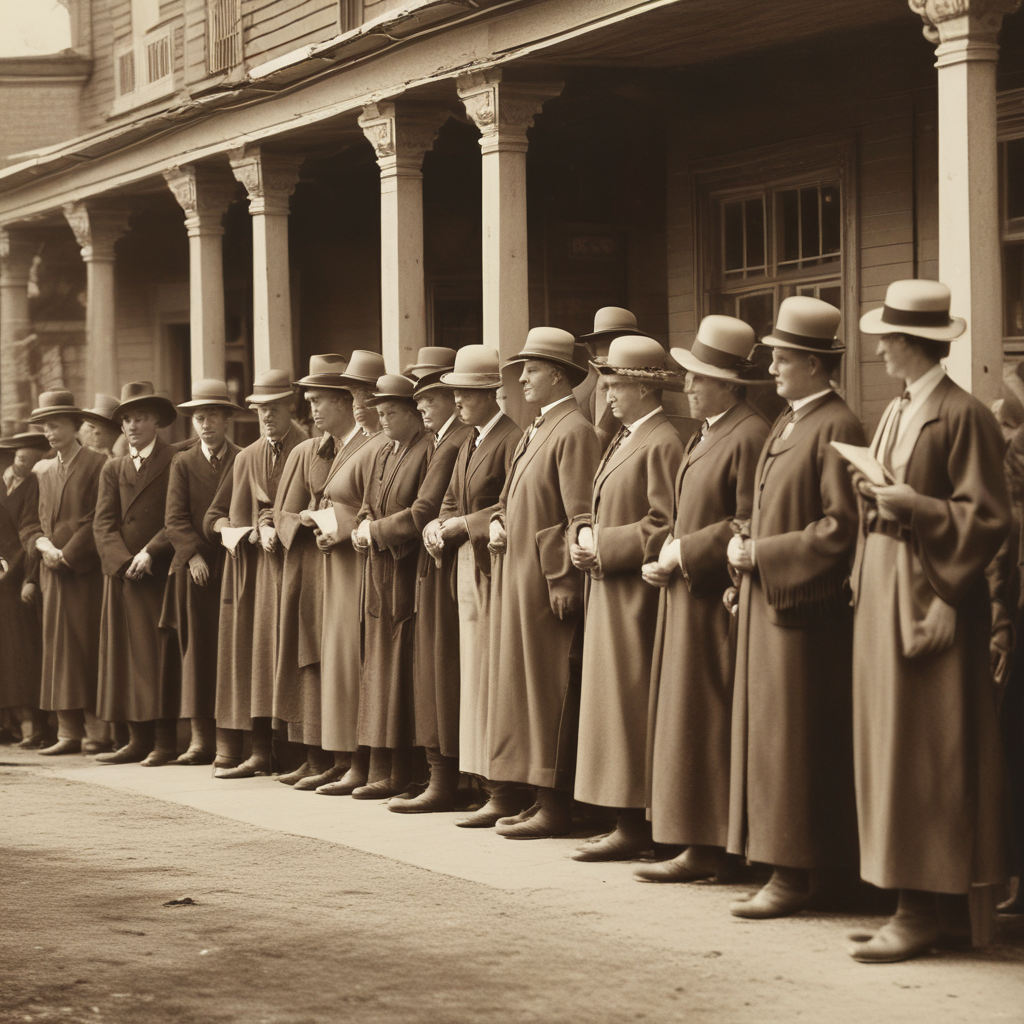
Every time you vote in a primary election or see a ballot measure, you’re using a radical democratic innovation that was once considered dangerous by political elites. These tools of modern democracy didn’t emerge naturally – they were fought for by forgotten political reformers who risked their careers and safety to break the stranglehold of corrupt political machines in early 1900s America.
These grassroots heroes created the foundation of participatory democracy that millions of Americans use today, yet their names have vanished from popular memory. Their story reveals how ordinary citizens can reshape democracy from the ground up – and offers a blueprint for modern reform movements.
When Political Machines Controlled Everything
At the dawn of the 20th century, American democracy was a facade. Political bosses in smoke-filled rooms selected candidates, distributed government jobs to loyal supporters, and made backroom deals that ignored voters’ wishes. Citizens had virtually no direct say in their government beyond choosing between pre-selected candidates in general elections.
Party machines controlled every aspect of political life through a system of patronage and corruption. Political machines like New York’s Tammany Hall decided who could run for office, what policies would be pursued, and how government resources would be distributed.
The Corruption Crisis
This system bred widespread corruption as political bosses sold government positions, took kickbacks from businesses, and used public resources for personal gain. Voters felt powerless to change a system that seemed designed to exclude them from meaningful participation. The stage was set for a democratic revolution led by reformers whose names history has largely forgotten.
The Oregon System: Blueprint for Modern Democracy
The breakthrough came from an unlikely source: the Pacific Northwest. In the early 1900s, forgotten political reformers in Oregon developed what became known as the Oregon System – a comprehensive package of democratic reforms that would transform American politics.
This revolutionary system included several key innovations:
- Direct primary elections that let voters choose candidates instead of party bosses
- Voter referendums allowing citizens to approve or reject laws passed by legislatures
- Initiative processes enabling voters to propose new laws directly
- Corrupt Practices Act limiting campaign spending and requiring financial disclosure
Spreading the Democratic Revolution
The Oregon System’s success caught the attention of reformers across the country. Progressive reformers exported these innovations to Northwest and Midwest states, creating a wave of democratic reform that fundamentally altered American politics.
By 1912, the reform movement had achieved its greatest triumph: the 17th Amendment establishing direct election of senators. This change replaced the old system where state legislatures appointed senators, often through corrupt bargains and backroom deals.
Grassroots Heroes Who Changed History
Behind these institutional changes were individual reformers who sacrificed personal comfort and safety to advance democratic participation. These forgotten political reformers worked without modern communication tools or massive funding, relying instead on grassroots organizing and moral conviction.
The Educator Reformers
Progressive thinkers like John Dewey and Lester Frank Ward recognized that democracy required an educated citizenry. These educational reformers placed universal education at the top of the progressive agenda, reasoning that successful democracy needed informed leaders and an educated public.
They faced fierce opposition from political machines that preferred ignorant, easily manipulated voters. Despite threats and intimidation, these reformers established the principle that democratic participation requires access to information and education.
The Direct Democracy Pioneers
Other forgotten heroes focused on creating mechanisms for direct citizen participation. They developed the initiative and referendum processes now used in 24 U.S. states, giving ordinary Americans the power to bypass corrupt legislatures and enact change directly.
These reformers also promoted women’s suffrage, believing that expanding voting rights would bring moral influence into politics and strengthen democratic institutions. Their efforts culminated in the 19th Amendment granting women the right to vote.
Lasting Legacy: How Reformers Still Shape Your Vote
More than a century later, the innovations of these forgotten political reformers remain central to American democracy. Every time you participate in a primary election, vote on a ballot measure, or receive an official voter pamphlet, you’re using tools these grassroots heroes created.
Modern Applications
The Oregon System’s voter pamphlet innovation now saves taxpayers millions in campaign costs while providing unbiased candidate information – a century-old solution to modern political problems. Direct primary elections, once considered radical, are now standard practice across the United States.
The initiative and referendum processes pioneered by progressive reformers continue enabling citizen-driven policy changes on issues from minimum wage increases to environmental protection. These direct democracy tools prove that ordinary citizens can still reshape policy without holding office.
Blueprint for Modern Reform
Perhaps most importantly, these forgotten heroes created a proven blueprint for grassroots political change:
- Identify systemic problems in democratic participation
- Develop practical solutions that empower ordinary citizens
- Build grassroots coalitions to advocate for change
- Persist despite opposition from entrenched interests
- Export successful reforms to other jurisdictions
Modern reform movements from campaign finance reform to voting rights advocacy follow this same pattern, proving the enduring relevance of progressive era innovations.
Lessons for Democracy’s Future
As contemporary Americans grapple with questions about democratic participation, voter access, and political corruption, the work of these forgotten political reformers offers both inspiration and practical guidance. They demonstrated that structural democratic change is possible when ordinary citizens organize effectively and persist despite powerful opposition.
Their success also reveals that democratic reform requires constant vigilance and renewal. The tools they created – primaries, referendums, anti-corruption laws – must be protected and updated for new challenges. Representative democracy remains a work in progress that each generation must actively maintain and improve.
The forgotten political reformers of the Progressive Era proved that American democracy could be transformed from the grassroots up. Their legacy lives on every time a citizen casts a ballot, knowing that democracy belongs to the people – not to political machines or corrupt elites. In an era of renewed concern about democratic institutions, remembering these quiet heroes reminds us that positive change remains possible when ordinary Americans decide to act.


Trending

 Global News2 months ago
Hidden Economic Warfare: How Climate Deals Secretly Control Global Trade
 Historical Figures3 months ago
7 Anonymous Heroes Who Changed History Forever – 3 Will Shock You

 Art & Design3 months ago
Ancient Potters’ 3,500-Year-Old Chemistry Secret That Still Baffles Scientists
 Art & Design3 months ago
Scientists Just Discovered What Renaissance Artists Knew All Along – It Changes Everything

 Fun Facts3 months ago
Scientists Just Discovered Space Isn’t Silent – The Sounds Will Shock You

 News & World3 months ago
Urban Explorers’ Most Terrifying Encounters in ‘Empty’ Buildings

 Global News4 months ago
Undefined Behavior Programming: The Hidden Digital Threat
 Historical Figures3 months ago
7 Unknown Historical Figures Who Secretly Changed the World