
Art & Design
Scientists Just Discovered What Renaissance Artists Knew All Along – It Changes Everything
Renaissance artists made mind-blowing scientific discoveries 400 years before modern science. What they found hidden in masterpieces will shock you.

Published
11 months agoon
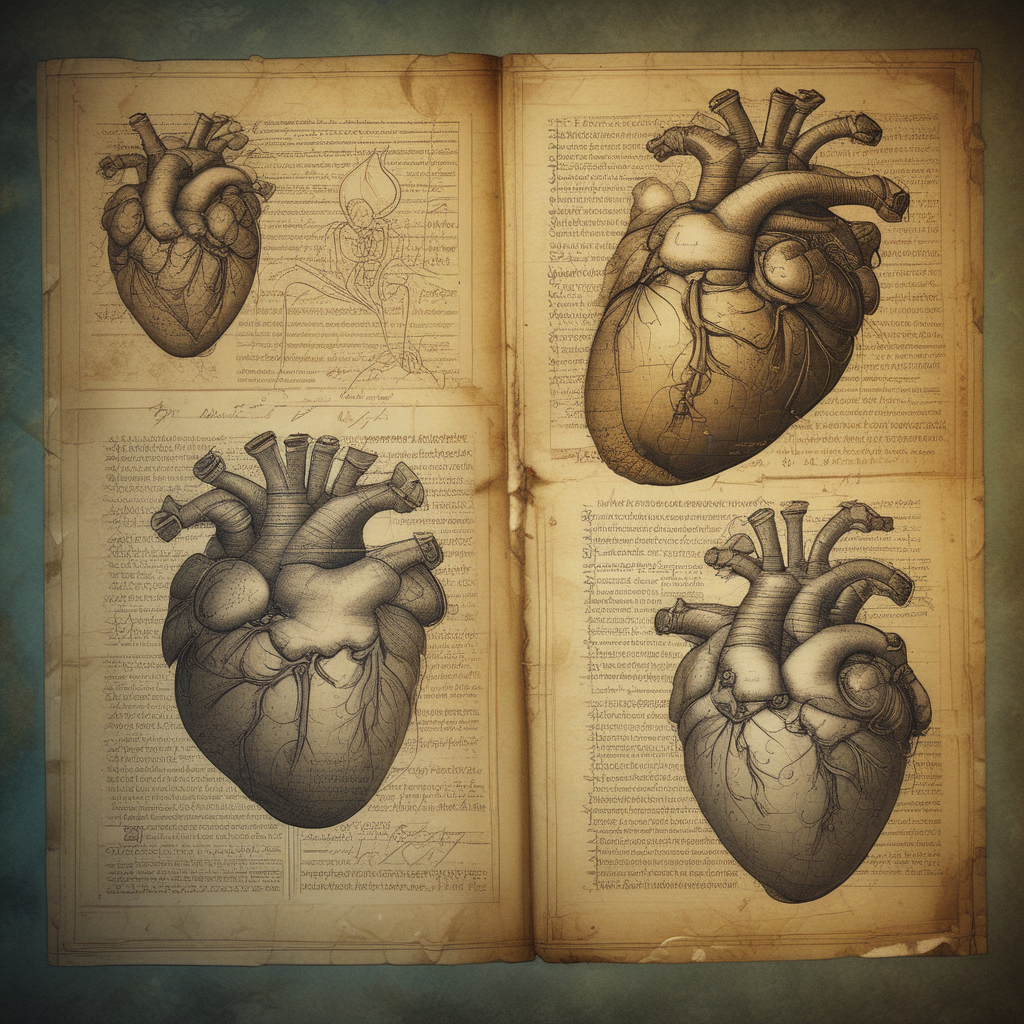
What if I told you that some of history’s most groundbreaking scientific discoveries weren’t made in laboratories or universities, but in dusty art studios by painters who were considered social outcasts? Renaissance artists were secretly conducting scientific research that wouldn’t be validated by formal science for another 400 years – and the proof has been hiding in their masterpieces all along.
While medieval physicians were still following ancient Greek texts about the human body, artists like Leonardo da Vinci were quietly revolutionizing our understanding of anatomy, physics, and natural phenomena. These creative geniuses weren’t just painting pretty pictures; they were conducting systematic scientific investigations that put contemporary scholars to shame.
Leonardo’s Heart-Stopping Discovery That Stunned Modern Doctors
Here’s something that will blow your mind: Leonardo da Vinci discovered that the human heart has four chambers and understood how the aortic valve works – in the 1500s. Medical science didn’t catch up to this knowledge until the 20th century, over 400 years later.
According to research from the Milan Art Institute, da Vinci’s anatomical pursuits led to scientific breakthroughs that formal science wouldn’t achieve for centuries. While doctors were still bloodletting patients based on medieval theories, Leonardo was conducting detailed dissections and making accurate observations about cardiac function.
The Secret Method Behind Leonardo’s Success
What made Leonardo’s discoveries so remarkable wasn’t just his artistic eye – it was his systematic approach to investigation. He performed over 30 human dissections, meticulously documenting everything he observed. His notebooks contain detailed drawings that show:
- Accurate depictions of heart valve functions
- Precise understanding of blood flow patterns
- Detailed knowledge of ventricular structure
- Insights into cardiac muscle mechanics
The irony? During the Renaissance, being an artist wasn’t considered a suitable occupation for a gentleman, yet these “unsuitable” individuals were making discoveries that esteemed medical scholars completely missed.
Why Artists Beat Scientists at Their Own Game
Renaissance artists had a unique advantage that formal scientists lacked: they needed to understand reality to recreate it. While academic physicians relied on ancient texts and theoretical knowledge, artists were forced to observe the world directly.
Research from Etchr Lab reveals that medieval and Renaissance artists used sophisticated geometric methods including circles, triangles, and star shapes to ensure anatomically accurate proportions in their drawings. This mathematical approach to human anatomy predated formal scientific methods by centuries.
The Artist-Scientist Methodology
Renaissance artists developed what we now recognize as proper scientific methodology:
- Direct observation – They studied subjects firsthand rather than relying on texts
- Systematic documentation – They kept detailed notes and drawings
- Experimental testing – They tested theories through practical application
- Iterative refinement – They continuously improved their understanding
This approach was revolutionary for its time, when most “learned” individuals simply accepted ancient authorities without question.
Hidden Scientific Treasures in Famous Masterpieces
The evidence of these scientific discoveries isn’t locked away in dusty archives – it’s hidden in plain sight within some of the world’s most famous artworks. Renaissance masters embedded their scientific knowledge directly into their paintings and sculptures.
Michelangelo’s Anatomical Secrets
Michelangelo’s sculptures reveal an understanding of human musculature that was incredibly advanced for his time. His dissections of corpses led to insights about:
- Muscle fiber direction and tension
- Bone structure and joint mechanics
- Skin elasticity and how it responds to underlying structures
- Proportional relationships between body parts
Dürer’s Mathematical Precision
Albrecht Dürer’s work demonstrates sophisticated understanding of perspective, geometry, and optical principles that wouldn’t be formally codified by science for decades. His treatises on human proportions show mathematical precision that rivals modern anatomical studies.
When Modern Science Finally Caught Up
The most mind-blowing aspect of these Renaissance discoveries is how long it took formal science to validate what artists already knew. 20th and 21st-century medical imaging and research has repeatedly confirmed the accuracy of observations made by artists 500 years ago.
According to art historians, many of Leonardo’s anatomical drawings are so precise that they’re still used in medical education today. His understanding of the cardiovascular system, nervous system, and musculoskeletal system was remarkably accurate.
Modern Validation Examples
Recent scientific discoveries that confirm Renaissance artistic observations include:
- Cardiac imaging technology validating Leonardo’s heart chamber discoveries
- Advanced microscopy confirming artistic observations about tissue structure
- Biomechanical studies proving the accuracy of Renaissance understanding of joint function
- Neurological research supporting artistic theories about brain-body connections
What This Means for Innovation Today
The story of Renaissance artists beating scientists at their own game teaches us something profound about innovation and discovery. Sometimes the most groundbreaking insights come from outside traditional academic boundaries.
These artists succeeded because they combined:
- Careful observation with creative thinking
- Practical application with theoretical understanding
- Visual documentation with systematic methodology
- Interdisciplinary knowledge with specialized expertise
As noted by researchers at the Milan Art Institute, it wasn’t just Leonardo’s interest in anatomy that makes this so fascinating – it was that his artistic pursuits accidentally advanced human knowledge by centuries.
The Legacy of Artist-Scientists
Today, we’re seeing a renaissance of the Renaissance approach. Modern innovators increasingly recognize that breakthrough discoveries often happen at the intersection of different disciplines. The most successful researchers, inventors, and problem-solvers often combine artistic creativity with scientific rigor.
The work of companies like Apple, which famously combines technology with design thinking, echoes the Renaissance model of artist-scientists who refused to separate beauty from functionality.
The next time you visit a museum and admire a Renaissance masterpiece, remember: you’re not just looking at art. You’re witnessing some of the most advanced scientific research of the 16th century, conducted by visionaries who understood that the pursuit of beauty and the search for truth are ultimately the same quest. These artists didn’t just create timeless beauty – they unlocked secrets of human existence that formal science took centuries to rediscover.

You may like

Why Your City’s Name Isn’t What You Think – The Hidden Truth Revealed

Award Shows’ Secret Power Over Your Choices Will Shock You

How Street Art Secretly Rewires Your Brain and Transforms Cities

Why Third Culture Kids Become Comedy Superstars Will Change How You See Humor

Secret Codes That Punk Rockers Use Still Shape How We Text Today


Why 53% of Travelers Now Plan Entire Trips Around Food Will Change Tourism Forever
Art & Design
Why Comic Sans Makes You Happy But Times New Roman Means Business
Discover how fonts secretly manipulate your emotions and decisions. The psychology behind typography will change how you see every word forever.
Published
8 months agoon
February 19, 2026
Every second of every day, fonts are silently manipulating your emotions and influencing your decisions without you even realizing it. That friendly rounded font on your favorite app? It’s designed to make you feel welcomed and trusting. The bold, angular typeface on that warning sign? It’s triggering your brain’s threat-detection system to make you pay attention.
Welcome to the fascinating world of typography psychology – where letterforms function as invisible persuaders in our daily lives, shaping everything from what we buy to how seriously we take information.
The Hidden Science Behind Font Psychology
Typography psychology represents the intersection of visual design and cognitive science, where every curve, angle, and spacing decision triggers specific emotional responses in your brain. When you see a rounded, friendly font like the ones used by tech startups, your subconscious immediately associates it with approachability and innovation. Conversely, traditional serif fonts like those used by newspapers activate neural pathways linked to authority and trustworthiness.
Research shows that professional creatives demonstrate measurable emotional reactions to specific fonts, with detailed sentiment analysis revealing clear psychological associations behind font preferences and aversions. This isn’t just about aesthetics – it’s about how our brains are hardwired to respond to visual cues.
How Your Brain Processes Typography
When you encounter text, your brain processes the font choice before you even register the words themselves. This split-second assessment influences:
- Credibility perception – serif fonts increase perceived trustworthiness by 15%
- Reading speed – certain fonts can improve comprehension rates
- Emotional state – rounded fonts activate the same neural pathways as seeing a friendly face
- Decision-making – bold fonts trigger urgency responses that influence purchasing behavior
The Shocking Impact Paradox: From Memes to Professional Design
Here’s something that will surprise you: Impact font ranked 3rd in professional creative preferences, despite being widely known for internet memes. According to a Creative Bloq study of 415 discussions from over 100 professional sources, Impact is viewed favorably for bold UI and intentional design applications.
This paradox reveals something crucial about typography psychology: context matters more than associations. When Impact is used intentionally for headlines or bold statements, it triggers feelings of strength and directness. When it’s used in memes, the same psychological triggers work – but the context changes the emotional outcome.
Why Meme Fonts Maintain Professional Credibility
The Impact phenomenon demonstrates how fonts can simultaneously exist in multiple psychological spaces. Professional designers recognize that the font’s inherent boldness and clarity make it effective for:
- Grabbing attention in digital interfaces
- Creating visual hierarchy in design layouts
- Conveying urgency or importance
- Maintaining readability at various sizes
2026 Typography Trends: Emotional-First Design Revolution
Typography trends for 2026 represent a dramatic shift toward emotional-first design, where fonts are specifically created to evoke psychological responses rather than simply convey information. According to Envato Elements typography trend reports, the biggest trends include:
Type-as-Graphic Design
Fonts are becoming graphic elements that communicate mood before content. These designs prioritize emotional impact over traditional readability, creating immediate psychological connections with viewers. The letterforms themselves tell a story and evoke specific feelings.
Chaotic Scripts and Imperfection
Trending toward authenticity, chaotic and imperfect fonts satisfy human needs for personal connection. These fonts trigger psychological responses associated with handwriting and personal touch, making digital communications feel more human and trustworthy.
Funky Curvy Serifs
Modern serif fonts with unexpected curves combine traditional authority with contemporary playfulness. This psychological balancing act appeals to both our need for credibility and our desire for innovation.
The Psychology of Font Emotions: What Each Style Triggers
Different font families activate distinct emotional responses in your brain:
Sans-Serif Fonts
Psychological trigger: Modernity, cleanliness, efficiency
- Helvetica: Neutrality and professionalism
- Arial: Accessibility and familiarity
- Futura: Innovation and forward-thinking
Serif Fonts
Psychological trigger: Tradition, authority, sophistication
- Times New Roman: Academic credibility and formality
- Georgia: Warmth combined with authority
- Garamond: Elegance and literary sophistication
Script and Display Fonts
Psychological trigger: Personality, creativity, human connection
- Rounded corners add friendliness while maintaining professional credibility
- Hand-lettered styles create intimacy and personal connection
- Bold display fonts trigger urgency and attention
Practical Applications: Harnessing Typography Psychology
Understanding font psychology gives you powerful tools for effective communication:
For Business Communications
Choose fonts based on your desired psychological outcome:
- Building trust: Use established serif fonts for formal communications
- Encouraging action: Bold sans-serif fonts create urgency without aggression
- Personal connection: Script or hand-lettered fonts make messages feel more intimate
For Digital Design
Typography choices directly impact user behavior:
- Rounded fonts increase perceived friendliness and encourage engagement
- Clean sans-serif fonts improve readability and reduce cognitive load
- Consistent font hierarchies guide users through information architecture
As we move into 2026, typography psychology becomes even more crucial as design trends prioritize emotional connection over pure functionality. The fonts you choose aren’t just aesthetic decisions – they’re psychological tools that shape how people think, feel, and act.
Next time you see a font, remember: it’s not just letters on a page. It’s a carefully crafted psychological trigger designed to influence your emotions and guide your decisions. The question is, will you use this knowledge to communicate more effectively, or will you remain unconsciously influenced by every typeface you encounter?
Art & Design
Ancient Oil and Water Trick Created Modern Printing Revolution
The 1796 discovery that turned simple oil-water repulsion into the world’s most influential printing method – and it started with a laundry list accident.
Published
8 months agoon
February 18, 2026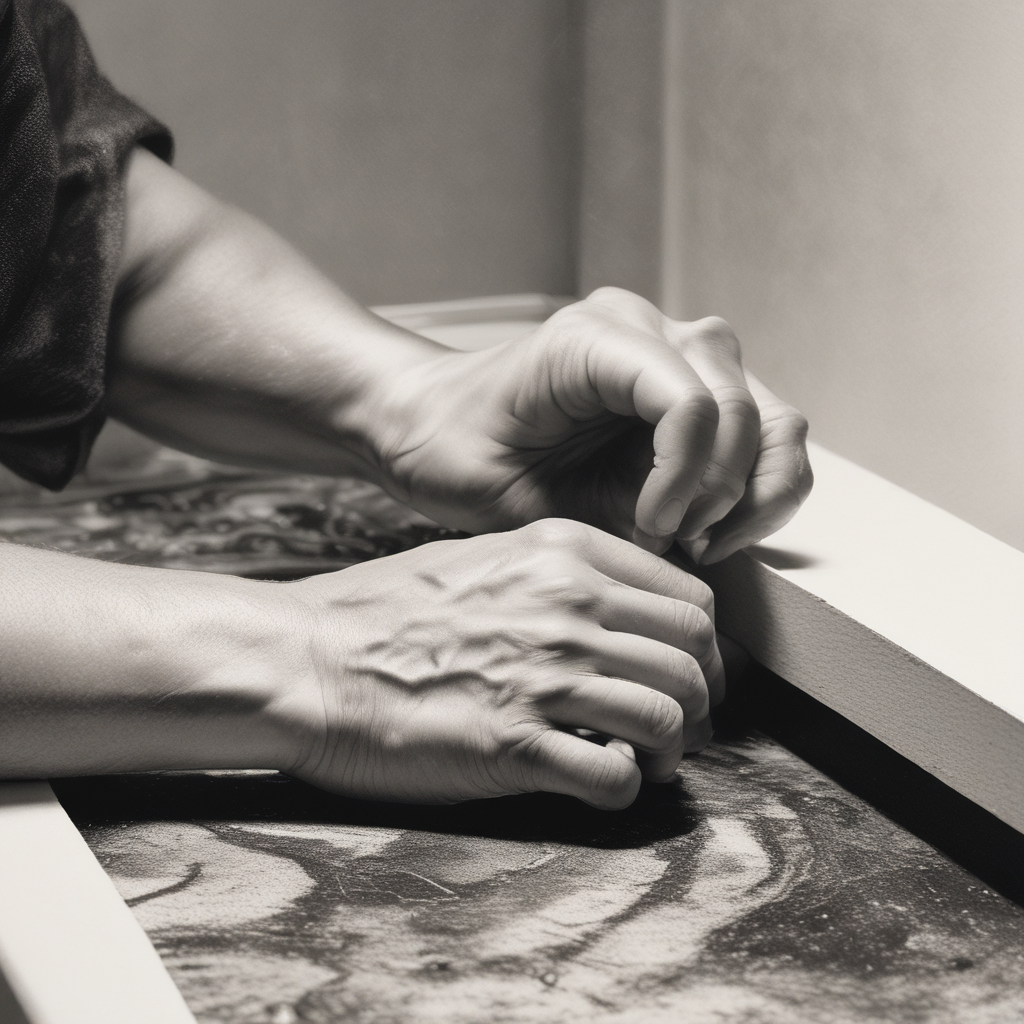
Imagine changing the entire course of human communication with nothing more than greasy crayon, a chunk of limestone, and a laundry list. That’s exactly what happened in 1796 when a struggling Bavarian playwright accidentally invented the lithography printmaking technique that would revolutionize how we share information forever.
The Accidental Genius Behind Lithography
Alois Senefelder wasn’t trying to change the world when he scribbled his mother’s laundry list on a limestone slab with a greasy crayon. The cash-strapped author was simply looking for a cheaper way to publish his theatrical works. But this moment of desperation led to one of history’s most important technological breakthroughs.
Traditional printing methods in the late 18th century required expensive copper plates or skilled wood engravers. Senefelder’s discovery offered something revolutionary: a flat-surface printing method that could reproduce both text and images with stunning clarity at a fraction of the cost.
According to historical records, Senefelder’s eureka moment came when he realized he could chemically treat the limestone to make certain areas attract oil-based ink while repelling water, and vice versa.
The Science Behind the Magic
The lithography printmaking technique relies on a fundamental principle of chemistry: oil and water naturally repel each other. This phenomenon, called immiscibility, became the cornerstone of what would eventually become modern printing.
How the Process Works
- The artist draws directly on porous Bavarian limestone using greasy materials like lithographic crayons or tusche
- The stone is treated with a mixture of weak acid and gum arabic, making non-image areas water-receptive
- Water is applied to the stone, adhering only to the blank areas
- Oil-based ink is rolled over the surface, sticking only to the greasy drawn areas
- Paper is pressed against the stone, transferring the image
As explained by printing experts at the Design Encyclopedia, “The water adhered only to the etched, hydrophilic areas, making them even more oil-repellant. An oil-based ink was then applied, and would stick only to the original drawing.”
From Bavarian Stone to Global Industry
What started with heavy limestone slabs has evolved into a sophisticated industrial process. Modern offset lithography accounts for approximately 38% of all printing processes worldwide, making it one of the most dominant printing technologies on Earth.
The Evolution Timeline
The transformation from Senefelder’s stone workshop to today’s high-speed printing plants represents centuries of innovation:
- 1796-1850s: Hand-drawn images on limestone, primarily for artistic prints
- 1850s-1900: Commercial adoption for posters, maps, and illustrations
- 1900-1950: Introduction of metal plates and rotary presses
- 1950-present: Digital integration and computer-to-plate technology
Today’s commercial lithography uses flexible plastic or metal plates instead of stone, but the core principle remains unchanged. Modern presses can produce thousands of impressions per hour while maintaining the same oil-water separation that Senefelder discovered over two centuries ago.
The Stone Connection That Endures
Despite technological advances, authentic Bavarian limestone remains the gold standard for fine art lithography. These massive stones, some weighing hundreds of pounds, are still quarried from the same region where Senefelder made his discovery.
The limestone’s unique properties make it irreplaceable for certain applications. Its natural porosity and chemical composition create the perfect surface for accepting both water and oil-based materials. Master printmakers often spend decades learning to work with these stones, grinding and preparing them by hand for each new image.
Why Stone Still Matters
According to printmaking historians, stone lithography offers several advantages that modern plates cannot replicate:
- Unlimited reworking capability – artists can modify images multiple times
- Superior tonal gradation for artistic applications
- Ability to achieve thousands of impressions from a single stone
- Unique surface texture that adds character to prints
Modern Masters and Commercial Giants
The lithography printmaking technique serves two distinct worlds today: fine art creation and mass commercial printing. In artist studios worldwide, printmakers still work with traditional stones, creating limited edition prints that can sell for thousands of dollars.
Meanwhile, commercial offset lithography powers the production of:
- Newspapers and magazines
- Packaging and labels
- Books and catalogs
- Marketing materials and brochures
- Art reproductions and posters
Major printing companies have invested millions in digital lithographic systems that can transition seamlessly from computer files to printed materials. These hybrid technologies combine traditional oil-water principles with laser imaging and automated plate production.
The Digital Revolution
Computer-to-plate (CTP) technology has eliminated many traditional steps while preserving the fundamental lithographic process. Digital files are now laser-etched directly onto plates, creating the same oil-receptive and water-receptive areas that Senefelder achieved by hand.
This evolution has made lithography more accessible than ever, allowing small businesses and individual artists to produce professional-quality printed materials without massive capital investment.
Environmental and Economic Impact
Modern commercial lithography has adapted to environmental concerns while maintaining efficiency. Water-based inks, recyclable plates, and digital workflows have significantly reduced the ecological footprint of lithographic printing.
The economic impact cannot be overstated. The printing industry, built largely on lithographic principles, employs millions worldwide and generates hundreds of billions in annual revenue. From the morning newspaper to product packaging, lithography touches virtually every aspect of modern commerce and communication.
Recent innovations include waterless lithography and UV-cured inks, pushing the technology even further beyond its humble beginnings on a Bavarian limestone slab.
What began as Alois Senefelder’s desperate search for affordable publishing has become the invisible foundation of our information age. Every time you read a magazine, unwrap a product, or admire a poster, you’re witnessing the enduring legacy of that accidental discovery in 1796. The simple principle that oil and water don’t mix continues to shape how humanity shares ideas, art, and knowledge across the globe – proving that sometimes the most revolutionary innovations come from the most unexpected moments.
Art & Design
Street Artists Use These 5 Brain Tricks to Change Your Mind Forever
Discover the hidden psychological tactics urban artists use to bypass your mental defenses and create powerful social change through strategic street art placement.
Published
8 months agoon
February 16, 2026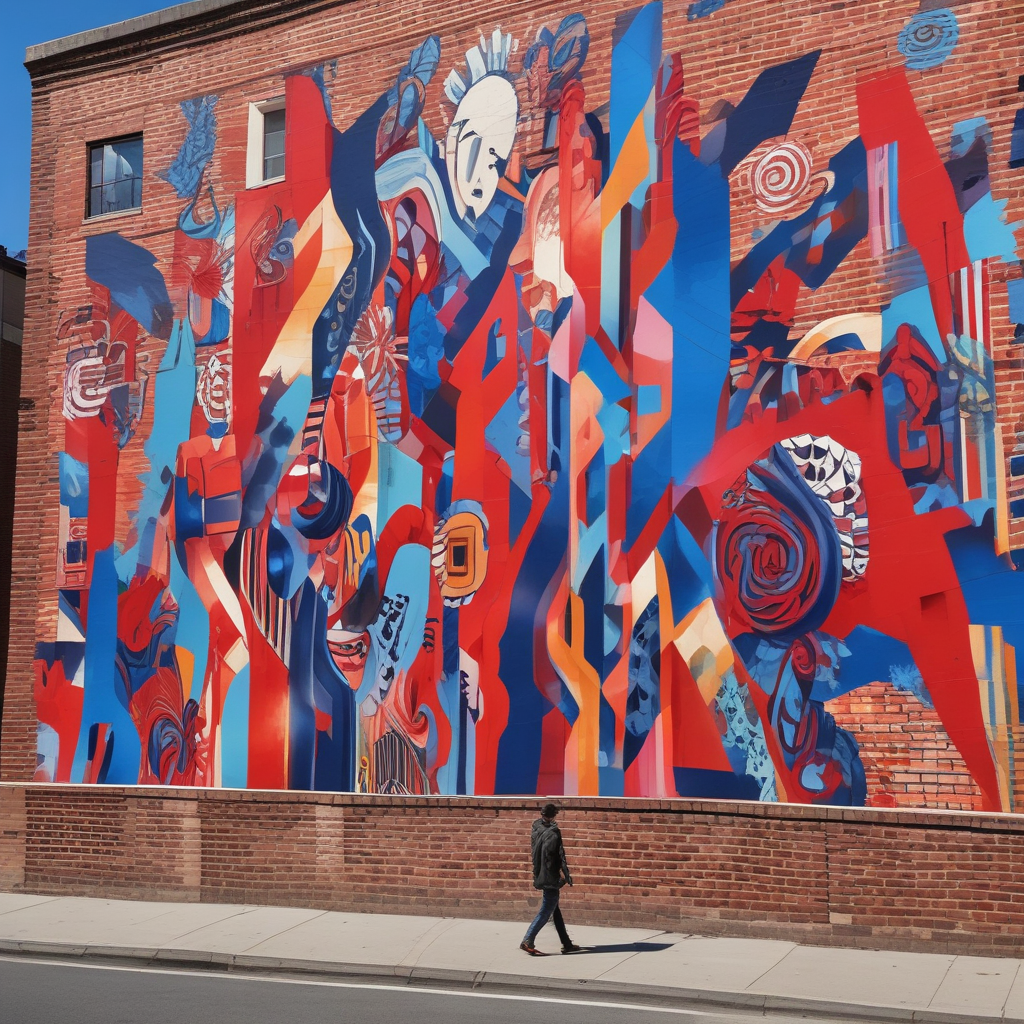
You’re walking to work, mind on autopilot, when a massive mural stops you dead in your tracks. Your heart rate quickens, your perspective shifts, and suddenly you’re thinking about social justice, political corruption, or community identity. What just happened? You’ve been psychologically hijacked by a street art psychology technique that artists have been perfecting for decades.
Unlike gallery art that requires deliberate visitation, street art ambushes viewers during routine activities, creating involuntary encounters that can fundamentally alter perspectives. This guerrilla approach to visual communication taps into powerful psychological principles that make it one of the most effective mediums for driving social change in modern society.
The Ambush Effect: How Street Art Bypasses Your Mental Filters
Traditional advertising and art must compete for your attention in cluttered environments. Street art, however, operates on a different psychological principle called the ambush effect. When you encounter unexpected visual stimuli during routine activities, your brain’s filtering mechanisms are temporarily disabled, making you more receptive to new information and emotional responses.
This phenomenon explains why cities like Berlin have transformed former division sites into open-air galleries, demonstrating street art’s evolution from perceived vandalism to powerful tourist attraction. The psychological impact occurs because viewers aren’t mentally prepared to encounter art, leaving them more vulnerable to its message.
Strategic Timing and Placement
Urban artists understand that psychological vulnerability peaks during transitional moments:
- Morning commutes when minds are still awakening
- Evening walks when people are processing their day
- Weekend strolls when mental defenses are relaxed
- Moments of urban stress when emotional receptivity increases
This strategic placement creates what researchers call “micro-interventions” – brief psychological disruptions that can have lasting impact on behavior and beliefs.
Color Psychology in Urban Canvas: The Science Behind Visual Impact
Street artists don’t choose colors randomly. They employ sophisticated understanding of color psychology street art techniques to trigger specific emotional and behavioral responses in viewers. Red graffiti in corporate districts creates different neurological reactions than blue murals in residential neighborhoods.
Research shows that street art serves as a catalyst for social change by expressing motifs like ‘population density’ and ‘urban anxiety’, particularly in dense metropolitan areas like São Paulo where color choices become psychological tools for processing urban stress.
The Neuroscience of Color Impact
Different colors activate specific neural pathways:
- Red: Increases urgency and emotional arousal, perfect for political messages
- Blue: Creates calming effects while enhancing trust and communication
- Yellow: Stimulates attention and optimism, ideal for community-building art
- Black and white: Forces focus on form and message without emotional distraction
Artists strategically combine these psychological triggers with urban environments to maximize their social impact.
From Vandalism to Tourism: Berlin’s Psychological Transformation
Perhaps nowhere is the psychology of collective perception more evident than in Berlin’s remarkable transformation. What once symbolized urban decay and criminal activity now attracts millions of tourists annually, demonstrating how urban art psychology can literally rewire societal attitudes.
This cultural shift reveals how collective psychology adapts – the same visual elements that once signified danger now signal authenticity, creativity, and cultural vibrancy.
The Psychological Shift Process
Berlin’s transformation followed predictable psychological patterns:
- Initial resistance: Brain associates graffiti with disorder and threat
- Exposure effect: Repeated viewing reduces negative associations
- Context reframing: Tourism and media coverage create positive associations
- Identity integration: Street art becomes part of cultural identity
This process demonstrates how graffiti psychological impact can evolve from negative to positive through strategic cultural intervention.
The Social Change Engine: Psychological Principles in Action
Street artists function as informal psychologists, using evidence-based techniques to drive political messaging and cultural commentary. Modern street art differs from traditional graffiti in its strategic psychological approach, often being commissioned specifically to influence public opinion and behavior.
Core Psychological Tactics
Successful social change through street art employs several key psychological principles:
- Cognitive dissonance: Creating tension between existing beliefs and new visual information
- Social proof: Using crowd scenes and community imagery to suggest widespread support
- Emotional contagion: Employing facial expressions and body language that viewers unconsciously mirror
- Narrative transportation: Telling visual stories that psychologically transport viewers into different perspectives
These techniques explain why street art social change campaigns can be more effective than traditional advertising or political messaging.
The Neuroscience of Public Art: Why Street Art Sticks
Neuroscientific research reveals why street art creates stronger memories and emotional connections than gallery pieces. The combination of unexpected encounter, environmental context, and emotional arousal creates what researchers call “flashbulb memories” – vivid, lasting recollections tied to specific emotions and locations.
Studies show that graffiti art contributed to the resurfacing of overtly politicized art forms in movements like culture jamming and tactical media, demonstrating its psychological power to influence broader cultural conversations.
Memory Formation and Emotional Impact
Street art’s psychological sticking power comes from several neurological factors:
- Contextual encoding: Memories formed in everyday environments are more accessible
- Emotional amplification: Surprise and aesthetic pleasure enhance memory consolidation
- Repetitive exposure: Daily encounters strengthen neural pathways
- Social validation: Shared experiences with others reinforce memory importance
This neurological advantage makes street art particularly effective for long-term attitude and behavior change.
The Future of Urban Psychology
As street art continues evolving from rebellion to mainstream cultural tool, its psychological applications are expanding. Cities now deliberately commission murals to influence everything from crime rates to community cohesion, recognizing the profound impact of street art psychology on urban life.
The future promises even more sophisticated applications: augmented reality integration, biometric response monitoring, and AI-designed optimal color combinations for specific psychological outcomes. What began as simple territorial marking has become a sophisticated science of human behavior modification through public art.
The next time a piece of street art stops you in your tracks, remember – your psychological response isn’t accidental. It’s the result of decades of artistic evolution and an increasingly sophisticated understanding of how visual stimuli can hijack your brain to create lasting social change.


Trending

 Art & Design11 months ago
Ancient Potters’ 3,500-Year-Old Chemistry Secret That Still Baffles Scientists

 Historical Figures11 months ago
7 Anonymous Heroes Who Changed History Forever – 3 Will Shock You

 Global News10 months ago
Hidden Economic Warfare: How Climate Deals Secretly Control Global Trade

 Ancient History9 months ago
Ancient Incas Built Bridges From Grass That Armies Crossed – 600 Years Later They’re Still Standing

 Fun Facts11 months ago
Universe Size Comparisons That Will Blow Your Mind
 Ancient History9 months ago
Ancient Pyramid Workers Left 4,500-Year-Old Graffiti That Rewrites History

 Fun Facts11 months ago
Scientists Just Discovered Space Isn’t Silent – The Sounds Will Shock You

 News & World10 months ago
Urban Explorers’ Most Terrifying Encounters in ‘Empty’ Buildings