
Ancient History
Ancient Polynesians Had Navigation Superpowers That Defy Logic
Discover how Polynesian navigators crossed 10,000 miles of Pacific Ocean using only stars, waves, and birds – no instruments needed. Their techniques will amaze you.

Published
3 months agoon

Imagine setting sail across thousands of miles of open ocean with no GPS, no compass, no maps, and no instruments of any kind. Sounds impossible? Ancient Polynesian navigators did exactly that, crossing over 10,000 miles of the Pacific Ocean to colonize hundreds of remote islands. Their supernatural-seeming abilities to read the ocean, stars, and sky represent one of humanity’s most incredible achievements in navigation and exploration.
The Mind-Blowing Scope of Polynesian Ocean Mastery
The Polynesian Triangle covers an area larger than the continental United States, stretching from Hawaii in the north to New Zealand in the south and Easter Island in the east. What makes this even more astounding is that modern DNA research reveals this expansion wasn’t gradual – it happened in an explosive burst around 800 CE, fundamentally changing how we understand Pacific maritime history.
These master seafarers reached destinations that seem impossible even by today’s standards:
- Hawaii – 2,400 miles from the nearest populated land
- Easter Island (Rapa Nui) – the most isolated inhabited island on Earth
- New Zealand – requiring navigation across some of the world’s roughest seas
- Tahiti and countless atolls – tiny specks of land in a vast blue wilderness
The Secret Navigation Techniques That Seem Like Magic
How did Polynesian navigators accomplish these seemingly impossible journeys? They developed a sophisticated system of wayfinding that used every natural phenomenon as a navigation tool.
Celestial Navigation: Reading the Star Map
Expert navigator Nainoa Thompson, the first Hawaiian in centuries to navigate using only traditional methods, explains that Polynesian wayfinding draws on mental maps of where hundreds of stars rise and set. Navigators would steer toward one star as it lifts from the horizon, then shift to the next as it climbs out of view.
This star compass system divided the horizon into 32 directional points, each marked by the rising and setting positions of specific stars throughout the year.
Wave Pattern Reading: The Ocean’s Hidden Language
Perhaps most incredibly, master navigators could detect land by reading wave patterns created by distant islands. Swells reflect and refract when they encounter land masses, creating distinctive interference patterns that experienced wayfinders could feel through the hull of their vessel.
They learned to identify:
- Primary swells from seasonal wind patterns
- Secondary swells created by distant weather systems
- Reflected waves bouncing off invisible islands beyond the horizon
- Subtle changes in wave height and rhythm indicating proximity to land
Natural Signs: Birds, Clouds, and Ocean Life
Polynesian navigators became masters at interpreting nature’s navigation clues:
- Bird flight patterns – Different species fly specific distances from land, revealing proximity to islands
- Cloud formations – Certain cloud types form over land masses, visible from great distances
- Ocean phosphorescence – The glow of plankton changes near reefs and shallow water
- Ocean color and debris – Floating vegetation and water color shifts indicate nearby land
The Vessels: Engineering Marvels of the Pacific
These navigation superpowers were paired with equally impressive vessels. Double-hulled voyaging canoes and outrigger designs provided the perfect platform for long-distance ocean travel. These craft were:
- Stable enough for precise navigation observations
- Fast enough to make efficient progress across vast distances
- Seaworthy enough to handle Pacific storms and swells
- Spacious enough to carry families, livestock, and supplies for colonization
Modern Proof: The Hōkūleʻa Revival
For decades, many dismissed Polynesian navigation as impossible, claiming the island settlements must have been accidental. Then came Hōkūleʻa, a traditionally-built voyaging canoe that has proven ancient techniques work perfectly.
Launched on March 8, 1975, Hōkūleʻa completed its famous Hawaii to Tahiti voyage in 1976 using exclusively traditional navigation techniques. This groundbreaking journey sparked a renaissance in Polynesian wayfinding.
Even more impressive, from 2013-2019, Hōkūleʻa circumnavigated the world using only non-instrument navigation, visiting 150 ports and 18 nations. This modern achievement validates what Polynesian ancestors accomplished over a thousand years ago.
Training the Next Generation
The revival has revealed just how sophisticated traditional navigation training was. Master navigators underwent years of intensive education, memorizing:
- The rising and setting points of over 200 stars
- Seasonal wind and weather patterns across vast ocean areas
- Wave characteristics around dozens of island chains
- Migration patterns and behaviors of numerous seabird species
Cultural Knowledge Systems: Navigation as Sacred Art
Polynesian navigation was far more than a technical skill – it was a sacred cultural practice passed down through generations of master wayfinders. This knowledge was preserved through:
- Oral traditions and navigational chants
- Hands-on training during actual ocean voyages
- Sacred ceremonies and rituals
- Stick charts showing wave patterns around island groups
Archaeological evidence suggests these techniques allowed Polynesians to navigate thousands of kilometers across the Pacific with remarkable precision, using a holistic understanding of natural phenomena that modern science is still working to fully comprehend.
Lessons for Our GPS-Dependent World
In our age of satellite navigation and digital maps, the story of Polynesian wayfinding offers profound lessons. These ancient mariners achieved navigation precision that rivals modern technology, using nothing but careful observation, cultural knowledge, and an intimate understanding of natural patterns.
Their legacy reminds us that human ingenuity and connection to the natural world can accomplish what seems impossible. The techniques that carried them across 10,000 miles of open ocean continue to inspire indigenous communities worldwide and prove that traditional knowledge systems remain viable alternatives to our technology-dependent modern world.
Perhaps most remarkably, what once seemed like supernatural navigation abilities were actually the result of systematic observation, cultural wisdom, and generations of accumulated maritime knowledge – proving that the impossible becomes possible when human determination meets deep understanding of the natural world.


You may like


Ancient Persia’s Secret Weapon That Built History’s First Superpower


Hidden Underground Cities Beneath Major Cities Will Leave You Speechless


Ancient Alchemists’ Pottery Secret That Modern Science Finally Decoded

Ancient Pyramid Workers Left 4,500-Year-Old Graffiti That Rewrites History

Ancient Muslim Engineers Had Tide Mills 800 Years Before Europe


7 Lost Cities You Can Actually Dive To – The Underwater Ruins Are Breathtaking
Ancient History
Ancient General’s 3-Move War Strategy That Modern Armies Still Copy
Hannibal’s battlefield genius at Cannae created military tactics so brilliant that West Point and elite academies teach them 2,200 years later. Discover how.
Published
2 weeks agoon
February 18, 2026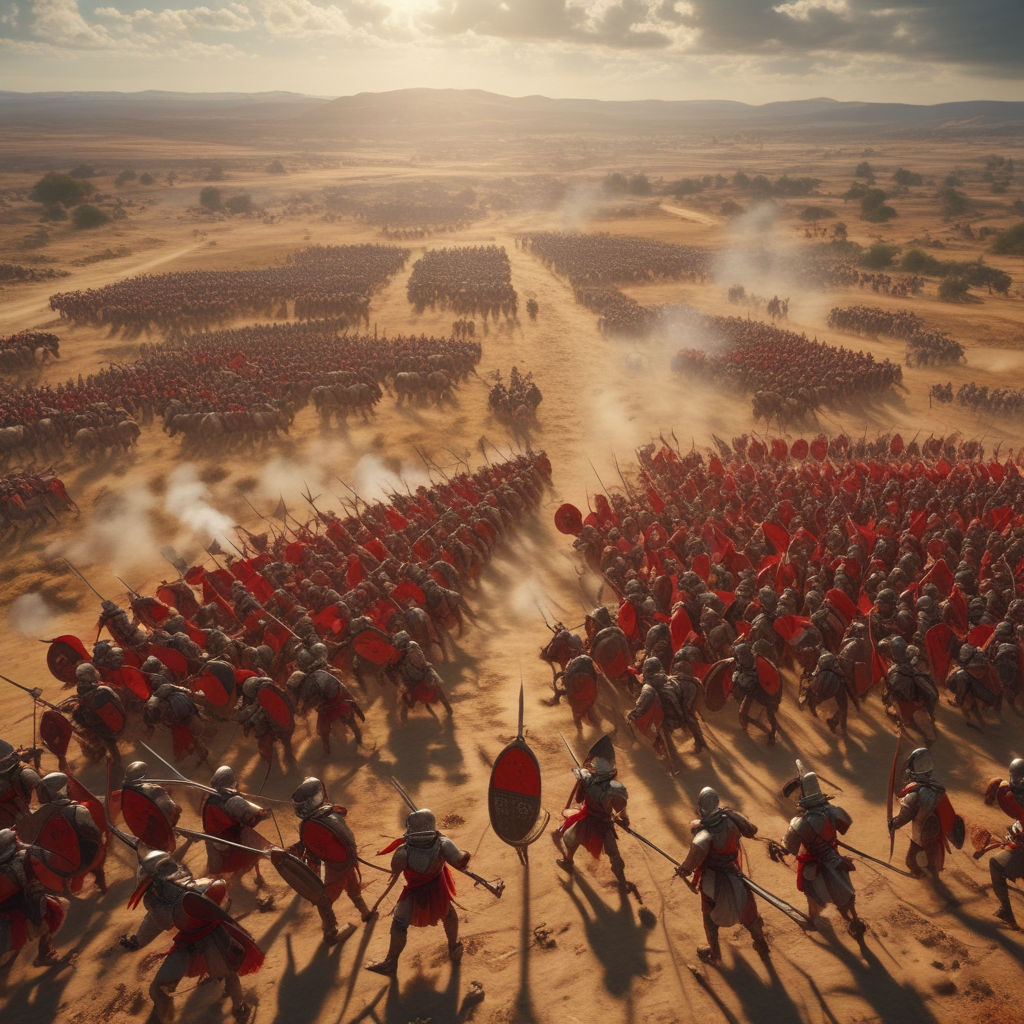
Imagine a single battle so devastating that it killed 70,000 enemy soldiers in one day – and the tactics used are still being taught at military academies worldwide over two millennia later. This wasn’t fiction; this was the genius of Hannibal Barca, whose revolutionary Hannibal military tactics at the Battle of Cannae in 216 BC changed warfare forever.
While most people know Hannibal for crossing the Alps with elephants, his true legacy lies in the battlefield innovations that transformed military strategy from ancient Rome to modern conflicts. His techniques influenced everything from Napoleon’s campaigns to D-Day operations, proving that sometimes the most enduring innovations come from the most desperate circumstances.
The Cannae Masterpiece: When Hannibal Rewrote Military Strategy
The Battle of Cannae strategy represents perhaps the most studied military engagement in history. Facing a Roman army nearly twice his size – approximately 86,000 Romans against his 50,000 troops – Hannibal didn’t retreat or seek better ground. Instead, he created what military historians call the perfect double envelopment tactic.
The Genius of the Double Pincer Movement
Hannibal’s innovation was deceptively simple yet brutally effective:
- Weak center placement: He positioned his weakest troops in the center, allowing them to slowly retreat and draw Romans forward
- Hidden strength on flanks: His elite African infantry waited on the wings, invisible to Roman commanders
- Perfect timing: As Romans pushed into the “retreating” center, the flanks closed like jaws, surrounding the entire army
- Complete encirclement: Roman numerical advantage became a liability as soldiers couldn’t maneuver in the crushing pocket
The result? Approximately 70,000 Roman casualties in a single day – one of the bloodiest defeats in Roman military history. More importantly, Hannibal had created a tactical template that modern military academies still teach as the gold standard of battlefield maneuver warfare.
The Impossible March: Logistical Innovation Across the Alps
Before Hannibal could revolutionize battlefield tactics, he had to solve an even greater challenge: how to transport an entire army – including Hannibal war elephants – across the treacherous Alps to attack Rome from an unexpected direction.
Revolutionary Supply Chain Management
The Alpine crossing in 218 BC demonstrated logistical planning that wouldn’t be matched until modern warfare. Hannibal’s innovations included:
- Pre-positioned supplies: Secret agreements with Alpine tribes for food and shelter
- Engineering solutions: Using fire and vinegar to crack rock barriers blocking elephant passage
- Weather timing: Calculating optimal seasonal windows for mountain passage
- Multi-species logistics: Adapting supply requirements for horses, elephants, and diverse human troops
Recent archaeological evidence has strengthened these historical accounts. A 2,200-year-old elephant bone discovered in Spain may represent the first direct physical proof of Hannibal’s legendary war elephants, transforming mythical-seeming accounts into scientific reality.
Psychological Warfare and Multi-Cultural Army Management
Beyond tactical and logistical innovations, Hannibal pioneered ancient warfare innovations in psychological operations and diverse force management that modern militaries still study.
Managing a United Nations Army
Hannibal’s force included Africans, Spanish, Gauls, and various Mediterranean peoples – each with different fighting styles, languages, and motivations. His management innovations included:
- Cultural integration: Allowing different units to maintain their fighting traditions while coordinating overall strategy
- Merit-based promotion: Advancing soldiers based on battlefield performance regardless of ethnic background
- Shared purpose: Creating unified identity around defeating Rome rather than Carthaginian nationalism
- Psychological operations: Using Roman expectations against them through unexpected tactics and troop formations
Legacy in Modern Military Doctrine
The true measure of Hannibal’s innovations lies in their continued relevance. The Second Punic War tactics he developed during the 17-year conflict continue influencing military thinking across several domains:
Contemporary Applications
Modern pincer movements: From Patton’s Third Army operations in World War II to Gulf War tank maneuvers, commanders still use Hannibal’s double envelopment principles when terrain and enemy positioning allow.
Logistics revolution: Military supply chain operations, whether supporting D-Day landings or Operation Desert Storm, trace tactical DNA back to Hannibal’s revolutionary approach to moving armies across hostile terrain.
Asymmetric warfare: Hannibal’s strategy of taking the war directly to the Roman Republic, bypassing Roman and allied land garrisons, and Roman naval dominance established templates for confronting superior conventional forces through unexpected approaches.
The Archaeological Evidence Keeps Coming
Modern science continues validating historical accounts of Hannibal’s innovations. The recently discovered elephant bone represents just the beginning of archaeological evidence that’s bringing legendary tactics into scientific focus.
As one expert noted, this finding could be the first direct evidence of Hannibal’s legendary war elephants, providing scientific validation of accounts that seemed almost mythological. These discoveries remind us that behind every “impossible” historical achievement lay real innovations in planning, logistics, and tactical thinking.
Hannibal’s story proves that true military innovation comes not from superior numbers or technology, but from creative thinking, meticulous planning, and the courage to attempt the supposedly impossible. His techniques shaped not just ancient warfare, but established principles that continue guiding military strategists into the 21st century. When modern officers study battlefield maneuver at elite academies worldwide, they’re still learning from a Carthaginian general who nearly changed the course of Western civilization over two thousand years ago.
Ancient History
Ancient Underwater City That Rewrites 10,000 Years of History
Deep beneath India’s waters lies a massive 5-mile civilization that predates known history by millennia. The shocking discovery changes everything we know.
Published
2 weeks agoon
February 17, 2026
Imagine if everything you learned about ancient civilization was wrong. Deep beneath the Arabian Sea, off India’s coast, lies a discovery so extraordinary that it could rewrite the entire timeline of human history. The lost underwater city of Khambhat stretches an incredible 5 miles long and 2 miles wide, potentially predating the famous Indus Valley Civilization by thousands of years.
The Shocking Discovery That Changed Everything
In 2001, while conducting routine pollution monitoring in the Gulf of Khambhat, India’s National Institute of Ocean Technology stumbled upon something that would send shockwaves through the archaeological world. Using advanced marine acoustic techniques and sonar scanning, researchers detected massive geometric structures lying 20-40 meters beneath the Arabian Sea.
What they found defied all expectations:
- A sprawling underwater metropolis covering over 10 square miles
- Geometric patterns suggesting sophisticated urban planning
- Artificial structures with precise right angles and organized layouts
- Evidence of advanced drainage systems beneath the waves
The sheer scale of this underwater ancient civilization rivals any known ancient city, making it one of the most significant archaeological discoveries of the 21st century.
Mind-Blowing Artifacts That Defy Time
The artifacts recovered from the Khambhat site read like a catalog of ancient human achievement. Marine archaeologists have carefully extracted pottery fragments, intricate beads, sophisticated sculptures, and even human remains from the ocean floor.
The Controversial Dating Results
Here’s where the story becomes truly revolutionary: carbon dating of some artifacts suggests ages between 8,500 and 9,500 years old. If verified, this would push back the timeline of advanced human civilization by several millennia, challenging everything we thought we knew about when complex societies first emerged.
The implications are staggering:
- Pre-dates established ancient civilizations like Mesopotamia
- Suggests advanced urban planning existed thousands of years earlier than believed
- Indicates sophisticated cultures thrived during the end of the last Ice Age
- Could represent a previously unknown chapter of human development
According to recent archaeological research, such findings force scientists to reconsider established theories about early civilization development.
The Science Behind Underwater Archaeology
Studying an underwater ancient civilization presents unique challenges that land-based archaeology never faces. The Khambhat site lies beneath murky waters with strong currents, making detailed excavation extremely difficult.
Advanced Technologies Reveal Ancient Secrets
Researchers employ cutting-edge technology to peer through the ocean’s mysteries:
- Multi-beam sonar systems create detailed 3D maps of the seafloor structures
- Sub-bottom profilers reveal buried features beneath sediment layers
- Remotely operated vehicles (ROVs) collect artifacts and samples
- Marine magnetometers detect metal objects and structural anomalies
Marine archaeologists note that “the acoustic images show what appears to be huge geometric structures with right angles and artificial patterns that could indicate urban planning,” according to researchers from the National Institute of Ocean Technology.
How Climate Catastrophe Created an Underwater Time Capsule
The submersion of Khambhat tells a dramatic story of ancient climate change. Around 10,000 years ago, as the last Ice Age ended, massive glacial ice sheets melted, causing sea levels to rise dramatically worldwide.
Geological experts explain that the Gulf of Khambhat region experienced particularly severe flooding events during this period. What was once a thriving coastal civilization became an underwater tomb, perfectly preserved by the sea.
Environmental Evidence Supports the Timeline
The geological context supports the controversial dating:
- Post-glacial sea level rise occurred between 10,000-8,000 years ago
- The Arabian Sea coastline was dramatically different during this period
- River systems that once flowed through the area are now submerged
- Sediment layers confirm rapid submersion rather than gradual sinking
This natural disaster may have preserved one of humanity’s earliest urban centers in an underwater time capsule.
The Great Archaeological Debate
Not everyone in the archaeological community accepts the revolutionary implications of Khambhat. The discovery has sparked intense debate among experts worldwide, with some questioning the dating methods and interpretation of the evidence.
Skeptics Raise Valid Concerns
Critics argue that:
- Carbon dating of underwater artifacts can be contaminated by marine organisms
- Natural geological formations could be mistaken for artificial structures
- More extensive excavation is needed before drawing conclusions
- The timeline conflicts with established archaeological evidence from other sites
Archaeological dating specialists emphasize that “the carbon dating results are controversial and require extensive peer review, as they would fundamentally alter our understanding of when complex civilizations first emerged.”
Supporters Point to Compelling Evidence
However, proponents of the discovery highlight:
- The geometric precision of the underwater structures
- The variety and sophistication of recovered artifacts
- The site’s massive scale suggesting organized urban planning
- Consistent dating results from multiple artifact samples
Future Exploration and What It Could Mean
The Khambhat underwater ancient civilization represents just the beginning of a new chapter in archaeology. Plans for more extensive underwater excavations could provide definitive answers about the site’s age and significance.
Advanced technology continues to reveal new details about the submerged city. Recent surveys suggest that much of the site remains unexplored, potentially hiding even more remarkable discoveries.
Global Implications for Human History
If the Khambhat dating proves accurate, it would revolutionize our understanding of:
- When humans first developed complex urban societies
- How ancient civilizations adapted to dramatic climate change
- The sophistication of prehistoric engineering and planning
- The true timeline of human technological development
The discovery also raises intriguing questions about other underwater sites worldwide. Rising sea levels at the end of the Ice Age likely submerged numerous ancient settlements, suggesting that many chapters of human history remain hidden beneath the world’s oceans.
Whether the Khambhat site ultimately proves to be 9,000 years old or represents a more recent civilization, one thing remains certain: this underwater ancient civilization has already changed how archaeologists approach the study of human history. As technology advances and more underwater sites are discovered, we may need to completely rewrite the story of our ancient past, one submerged city at a time.
Ancient History
Ancient Persia’s Secret Weapon That Built History’s First Superpower
How Cyrus the Great’s revolutionary satrapy system created the world’s first federal government and changed how empires ruled forever – the genius revealed.
Published
1 month agoon
January 19, 2026
Imagine ruling an empire so vast that it would take six months just to send a message from one end to the other. In 550 BC, Cyrus the Great faced exactly this challenge when he created the largest empire the world had ever seen – spanning 5.5 million square kilometers across three continents. The secret to his success wasn’t just military might, but a revolutionary ancient Persian administrative system that would influence governance for millennia to come.
The Challenge of Ruling the World’s First Superpower
The Achaemenid Empire stretched from Eastern Europe to the Indus Valley, encompassing modern-day Iran, Iraq, Afghanistan, Turkey, Egypt, and parts of Greece and India. This wasn’t just territorial expansion – it was an administrative nightmare that required unprecedented innovation.
Previous empires had failed at this scale because they tried to impose uniform rule across diverse populations. The Persians took a radically different approach that would become the blueprint for successful multi-ethnic governance.
The Revolutionary Satrapy System: Ancient Persia’s Master Stroke
The genius of the ancient Persian administrative system lay in its balance between central control and local autonomy. Cyrus the Great divided his empire into provinces called satrapies, each governed by a appointed official known as a satrap.
How Satrapies Actually Worked
The satrapy system operated on three key principles that seem remarkably modern:
- Local Leadership: Satraps were often chosen from local nobility who understood regional customs and languages
- Cultural Tolerance: Local religions, laws, and traditions were preserved rather than replaced
- Economic Integration: Each satrapy paid tribute to the central government while maintaining internal economic autonomy
- Military Balance: Local forces were supplemented by Persian garrison troops to ensure loyalty
This approach solved the ancient world’s greatest logistical challenge – how to govern territories where communication could take months. By allowing local rulers to handle day-to-day governance while maintaining overall imperial unity, the Persians created history’s first effective federal system.
Cyrus the Great’s Administrative Innovations That Changed Everything
Beyond the satrapy system, Cyrus implemented several innovations that seem surprisingly modern:
The Royal Road: Ancient Persia’s Information Superhighway
The famous Royal Road stretched 1,600 miles from Sardis to Susa, featuring:
- Relay stations every 14 miles for fresh horses
- Professional messengers with diplomatic immunity
- Standardized rest stops and supply depots
- Reduced message delivery time from 6 months to just 9 days
Economic Standardization
The Persians introduced revolutionary economic policies including:
- Standardized currency (the gold daric and silver siglos)
- Uniform weights and measures across the empire
- Trade route protection and commercial law
- Tax collection systems that funded massive infrastructure projects
These innovations created the world’s first truly integrated economic zone, facilitating trade from the Mediterranean to Central Asia.
Managing Diversity: The Persian Approach to Multicultural Governance
What made the ancient Persian administrative system revolutionary was its approach to diversity. Unlike previous empires that sought to impose cultural uniformity, the Persians celebrated and utilized differences.
Religious Tolerance as State Policy
The famous Cyrus Cylinder, often called the first charter of human rights, proclaimed:
- Freedom of worship for all subjects
- Restoration of temples destroyed by previous rulers
- Return of displaced peoples to their homelands
- Prohibition of forced labor on religious projects
This wasn’t just idealism – it was practical politics. By respecting local customs, the Persians earned loyalty rather than resentment, reducing the need for constant military intervention.
Administrative Flexibility
Each satrapy could adapt Persian policies to local conditions:
- Egypt: Pharaonic traditions continued alongside Persian governance
- Babylon: Local law codes remained in effect for civil matters
- Greek cities: Democratic institutions coexisted with imperial oversight
- Jewish territories: Temple reconstruction was actively supported
The Lasting Legacy: How Persian Administration Shaped World History
The influence of the satrapy system extended far beyond the Persian Empire’s collapse. Historical analysis shows that this administrative model was adopted and adapted by numerous subsequent empires.
Immediate Successors
After Alexander conquered Persia in 331 BC, he didn’t destroy the satrapy system – he expanded it:
- Macedonian Empire: Alexander retained Persian administrators and married into Persian nobility
- Hellenistic kingdoms: The Seleucids and Ptolemies used modified satrapy systems
- Indo-Scythian kingdoms: Central Asian rulers adopted Persian administrative practices
- Kushan Empire: Combined Persian governance with Buddhist cultural policies
Modern Federal Systems
The principles pioneered by the ancient Persian administrative system are visible in today’s world:
- Federal governments that balance central authority with state/provincial autonomy
- International organizations like the EU that respect national sovereignty while promoting integration
- Corporate structures that allow local adaptation while maintaining brand unity
- Diplomatic protocols that still recognize concepts first established by Persian messengers
Why Persian Administrative Genius Still Matters Today
In our interconnected world, the challenges Cyrus faced – governing diverse populations across vast distances while maintaining unity and efficiency – remain remarkably relevant. The Persian approach of unity through diversity offers timeless lessons for modern leaders.
The ancient Persian administrative system proves that successful governance isn’t about imposing uniformity, but about creating frameworks that allow diversity to flourish within unified structures. From multinational corporations to international coalitions, the Persian model of respectful integration continues to influence how we organize complex, multicultural entities.
Perhaps most remarkably, this 2,500-year-old system anticipated many principles we consider fundamentally modern: federalism, religious freedom, diplomatic immunity, and economic integration. Cyrus the Great didn’t just build an empire – he created a template for managing human diversity that remains relevant in our globalized world.


Trending

 Global News2 months ago
Hidden Economic Warfare: How Climate Deals Secretly Control Global Trade

 Historical Figures3 months ago
7 Anonymous Heroes Who Changed History Forever – 3 Will Shock You

 Art & Design3 months ago
Ancient Potters’ 3,500-Year-Old Chemistry Secret That Still Baffles Scientists

 Art & Design3 months ago
Scientists Just Discovered What Renaissance Artists Knew All Along – It Changes Everything

 Fun Facts3 months ago
Scientists Just Discovered Space Isn’t Silent – The Sounds Will Shock You

 News & World3 months ago
Urban Explorers’ Most Terrifying Encounters in ‘Empty’ Buildings
 Global News4 months ago
Undefined Behavior Programming: The Hidden Digital Threat

 Historical Figures3 months ago
7 Unknown Historical Figures Who Secretly Changed the World