
Global Issues
Data Centers Environmental Impact: The Hidden Climate Cost
Discover how data centers environmental impact creates a massive carbon footprint behind every Google search, Netflix stream, and social media post.

Published
3 months agoon

The Invisible Climate Crisis in Your Pocket
Every time you send a text, stream a video, or scroll through social media, you’re unknowingly contributing to one of the fastest-growing sources of carbon emissions on the planet. Behind every digital interaction lies a vast network of energy-hungry data centers that are quietly becoming climate villains. The data centers environmental impact is so significant that these facilities now consume more electricity than entire countries, yet most people have never even heard of them.
While we celebrate going “paperless” and embracing the digital revolution, the reality is far more complex. Our seemingly clean digital lives are powered by massive server farms that require enormous amounts of electricity to keep the internet running 24/7.
The Staggering Scale of Digital Energy Consumption
The numbers behind data center energy consumption are truly eye-opening. According to the International Energy Agency, data centers consumed approximately 1-1.5% of global electricity in 2020, with projections showing this could skyrocket to 3-8% by 2030.
To put this in perspective:
- Data centers in Virginia alone consume more electricity than all residential customers combined in the state
- The global data center market is exploding from $200 billion in 2020 to over $400 billion by 2027
- Nearly 40% of data center energy goes solely to cooling systems to prevent servers from overheating
This massive energy appetite stems from the fact that data centers must operate continuously, with redundant systems ensuring zero downtime for the digital services we’ve come to depend on.
Breaking Down Your Digital Carbon Footprint
The Hidden Cost of Everyday Digital Activities
Every digital action has a carbon consequence, though the amounts might surprise you. Research by the Carbon Trust reveals that:
- A single Google search produces about 0.2 grams of CO2
- Streaming one hour of Netflix generates approximately 36 grams of CO2
- Sending an email with attachments can produce up to 50 grams of CO2
The Streaming Revolution’s Environmental Price
The explosion in streaming services has dramatically amplified the digital carbon footprint. Video streaming now accounts for over 50% of global internet traffic, with each hour of HD streaming requiring the same amount of electricity as running a refrigerator for a week. When millions of people binge-watch their favorite shows simultaneously, the collective environmental impact becomes staggering.
Geographic Hotspots: Where Data Centers Transform Communities
The data centers environmental impact isn’t evenly distributed across the globe. Instead, these facilities cluster in specific regions, creating localized environmental stress points that are transforming rural areas into energy-intensive industrial zones.
In Maryland, CNN climate reporting revealed that data centers are causing electricity costs to spike for residents, with climate experts warning this represents just “the tip of the iceberg” for future energy consumption. Similar patterns are emerging across:
- Northern Virginia: The world’s largest data center market, consuming more power than Washington D.C.
- Ireland: Data centers now consume 11% of the country’s total electricity
- Singapore: Government imposed moratorium on new data centers due to energy constraints
The Acceleration Factor: AI and Cryptocurrency Multiply the Problem
Artificial Intelligence’s Massive Energy Appetite
The AI revolution is supercharging data center energy consumption at an unprecedented rate. Training a single large AI model can consume as much electricity as hundreds of homes use in a year. As AI becomes integrated into everything from search engines to smartphones, this energy demand is expected to grow exponentially.
Cryptocurrency’s Climate Controversy
Perhaps no technology illustrates the environmental cost of our digital future better than cryptocurrency. Cambridge Centre for Alternative Finance data shows that Bitcoin mining alone consumes more electricity annually than entire countries like Argentina or Norway, highlighting how emerging technologies can rapidly amplify the climate change technology challenge.
Solutions and the Path to Green Data Centers
Industry Innovation and Renewable Energy
Fortunately, the tech industry is beginning to address these challenges head-on. Major companies are investing heavily in green data centers and renewable energy:
- Google has been carbon-neutral since 2007 and aims to run on 24/7 renewable energy by 2030
- Microsoft is developing underwater data centers that use ocean temperatures for cooling
- Facebook (Meta) designs facilities in cold climates to reduce cooling needs
What Individuals Can Do
While systemic change is crucial, individual actions can contribute to digital sustainability:
- Stream in standard definition instead of 4K when possible
- Delete unnecessary emails and files from cloud storage
- Choose eco-friendly email providers and web hosting services
- Support companies committed to renewable energy
The Urgent Need for Sustainable Digital Transformation
The data centers environmental impact represents one of the most pressing yet underrecognized environmental challenges of our time. As our digital consumption continues to grow at 8% annually according to Nature Climate Change studies, without significant intervention, information and communication technology could account for 20% of global electricity consumption by 2030. The time for conscious digital consumption and aggressive industry transformation is now, before our connected world disconnects us from a livable climate future.


You may like


10 Hidden Global Events of 2025 That Will Change Your Future


Aid Workers Face 12% More Attacks Than Ever – The Hidden War


These Bizarre Climate Fixes Could Save Earth – #3 Will Shock You


The Desperate Climate Plan to Wrap Earth in Space Particles Is Insane


Why Women Hold the Secret to Solving Climate Change Forever


Hidden Economic Warfare: How Climate Deals Secretly Control Global Trade
Global Issues
Why Some Countries Spend 100x More on Healthcare Yet Still Fail
Shocking healthcare spending gaps revealed: US spends most but ranks 10th while Spain achieves top results. Discover the truth about global healthcare inequality.
Published
2 weeks agoon
February 19, 2026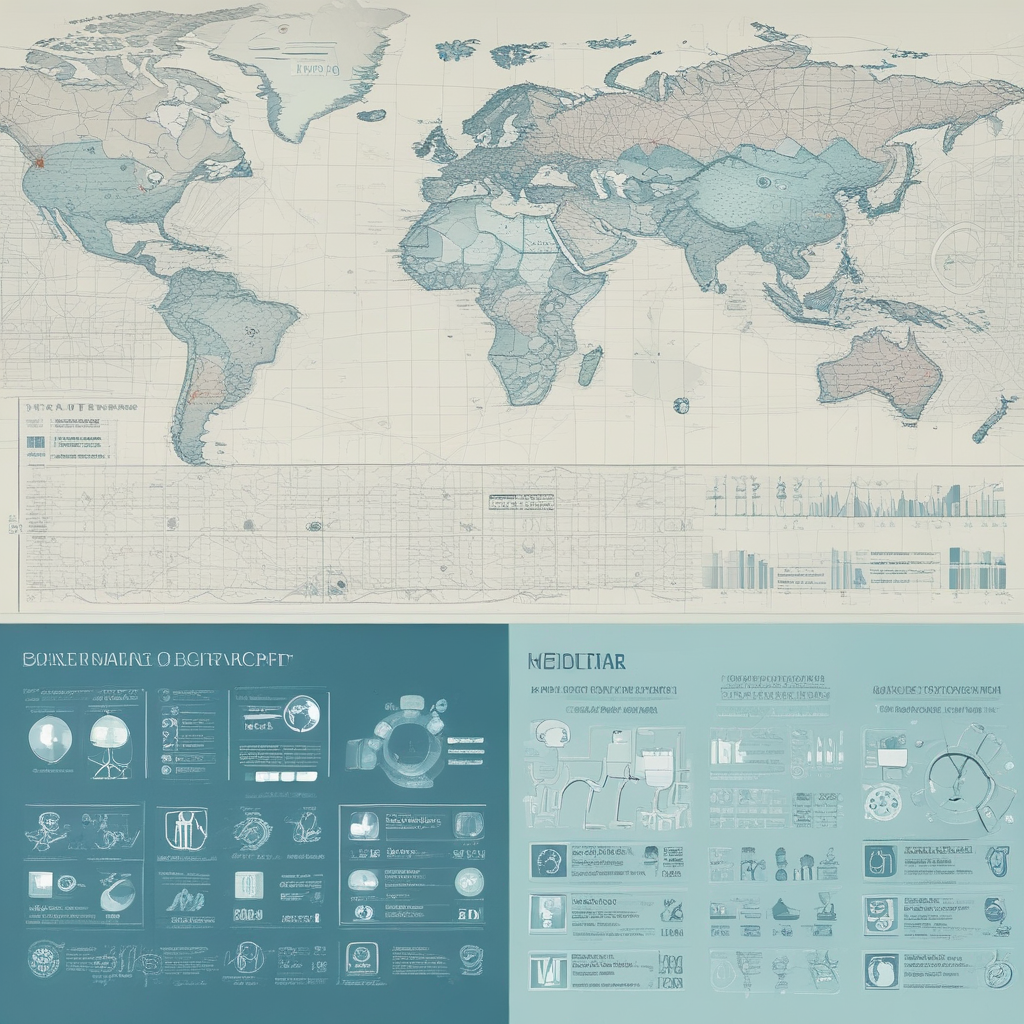
Imagine living in a world where your zip code determines whether you receive world-class medical care or struggle to access basic health services. This isn’t science fiction—it’s the stark reality of global healthcare inequality, where some nations spend over 100 times more per capita on healthcare than others, yet don’t always achieve the best outcomes.
The numbers are staggering: while European countries like Germany invest approximately $5,400 per person annually through public systems, other nations operate on less than $50 per capita. But here’s the shocking twist—the biggest spenders aren’t always the top performers.
The Staggering Numbers Behind Healthcare Spending Disparities
When examining healthcare spending by country, the disparities are nothing short of mind-boggling. The gap between the highest and lowest spending nations can exceed 100-fold differences in per capita expenditure, creating a global landscape of medical haves and have-nots.
Breaking Down the Spending Spectrum
- High-spending nations: The United States leads in per capita spending, far exceeding other developed countries
- European averages: Countries like Germany, France, and Sweden maintain robust public systems with average annual spending of approximately $5,400 per person
- Developing nations: Many countries operate healthcare systems on budgets that represent mere fractions of developed world spending
- The efficiency paradox: Some nations achieve remarkable results with modest investments through strategic system design
These health expenditure per capita differences create a global medical apartheid, where access to life-saving treatments and preventive care varies dramatically based on nationality and economic status.
The American Healthcare Paradox: Spending Most, Ranking Tenth
Perhaps no example illustrates the complexity of global healthcare inequality better than the United States. Despite spending significantly more per capita than any other developed nation, the US ranks 10th overall in health system performance, lagging behind countries like Australia, the Netherlands, and the United Kingdom.
Why More Money Doesn’t Equal Better Results
The American healthcare system’s unique approach—combining taxes, private insurance, and subsidized private organizations—contrasts sharply with the single-payer systems found in most other developed nations. This hybrid model, while generating substantial revenue for healthcare providers, often fails to deliver proportional improvements in patient outcomes.
Key factors contributing to this paradox include:
- Administrative complexity: The multi-payer system creates enormous administrative overhead
- Fragmented care: Lack of coordination between providers and insurance systems
- Preventive care gaps: Focus on treatment rather than prevention increases long-term costs
- Pricing inefficiencies: Limited price regulation leads to inflated medical costs
European Excellence: Maximizing Outcomes Through Strategic Investment
While the US struggles with efficiency, several European nations have mastered the art of delivering exceptional healthcare through well-designed public systems. Spain has the most efficient health system in Europe and ranks at the top worldwide alongside Hong Kong, Japan, and Singapore.
Germany’s Time-Tested Approach
Germany operates one of the oldest universal healthcare systems in the world, demonstrating how long-term investment in public health infrastructure pays dividends. Their model combines:
- Universal coverage: Ensuring all citizens have access to essential services
- Cost controls: Government regulation of medical pricing prevents runaway expenses
- Integrated care: Coordination between primary care, specialists, and hospitals
- Preventive focus: Investment in public health measures that reduce long-term costs
Sweden’s Maternal Health Success
Sweden exemplifies how targeted investment yields exceptional results. Maternal mortality and avoidable mortality rates in Sweden are among the lowest in developed countries, demonstrating the effectiveness of tax-funded universal systems that prioritize preventive care and early intervention.
The Efficiency Champions: Small Nations, Big Results
Some of the most impressive healthcare performance rankings belong to smaller nations that have optimized their systems for maximum efficiency. Italy, Singapore, and Iceland top the list of countries with the best healthcare systems in 2024, proving that smart system design trumps raw spending power.
Singapore’s Innovation Model
Singapore’s healthcare system combines government funding with individual responsibility, creating incentives for both preventive care and cost consciousness. Their approach includes:
- Mandatory health savings accounts: Individuals contribute to their own healthcare costs
- Government subsidies: Ensuring access regardless of individual means
- Technology integration: Leveraging digital health records and telemedicine
- Preventive care emphasis: Early intervention to prevent costly chronic conditions
Real-World Impact: What These Disparities Mean for Patients
Behind these statistics are real people whose lives are dramatically affected by their country’s approach to healthcare. The impact of global healthcare inequality extends far beyond numbers on a spreadsheet.
The Human Cost of Inequality
In high-performing systems like those found in Spain or Germany, patients enjoy:
- Comprehensive preventive care: Regular screenings and early intervention
- Coordinated treatment: Seamless transitions between care providers
- Financial protection: Healthcare needs don’t lead to bankruptcy
- Outcome focus: Systems designed to maximize patient health rather than profit
Conversely, in under-resourced systems, patients often face delayed diagnoses, limited treatment options, and catastrophic healthcare expenses that can devastate families financially.
Lessons Learned: The Path Forward for Global Health Equity
The evidence from top-performing healthcare systems reveals several key principles that transcend national boundaries and economic conditions. Universal healthcare systems consistently outperform fragmented approaches, regardless of the specific funding mechanism employed.
The most successful systems share common characteristics: universal access, cost controls, preventive care emphasis, and integrated service delivery. As nations grapple with aging populations and rising healthcare costs, these proven models offer blueprints for creating more equitable and efficient healthcare systems.
The 100-fold spending gap between nations represents both a challenge and an opportunity. By learning from the efficiency champions and addressing systemic inequalities, the global community can work toward a future where quality healthcare is determined by medical need rather than geographic lottery.
Global Issues
The Hidden Truth: How Growing Cities Accidentally Engineer Poverty
Urban sprawl creates mega-slums by pushing the poor into concentrated zones while the wealthy consume more land. Discover this shocking connection reshaping global cities.
Published
2 weeks agoon
February 17, 2026
While cities around the world expand outward at breakneck speed, a sinister side effect is quietly reshaping the landscape of global poverty. Urban land is expanding much faster than urban population, creating what experts call urban sprawl – and this seemingly innocent development pattern is accidentally engineering massive poverty zones that trap millions in cycles of economic exclusion.
By 2050, nearly 68% of the world’s population will live in urban areas, but the way our cities are growing is creating an invisible architecture of inequality that most people never see coming.
What Is Urban Sprawl Poverty and Why Should You Care?
Urban sprawl poverty occurs when cities expand outward faster than their populations grow, creating a complex web of spatial segregation. According to the United Nations Population Fund, this phenomenon is driven largely by wealthy populations consuming increasing amounts of urban land while simultaneously pushing lower-income communities into concentrated areas.
Unlike traditional rural poverty, this new form of urban marginalization creates what researchers call “accidental mega-slums” – not the informal settlements we typically associate with rapid urbanization, but formal neighborhoods that become poverty traps through systematic exclusion from urban development benefits.
The Numbers Don’t Lie
- Cities consume 78% of global energy while occupying less than 2% of Earth’s surface
- Urban areas produce more than 60% of greenhouse gas emissions
- The face of inequality is increasingly urban, with millions grappling with extreme poverty and marginalization
The Mechanics of Exclusion: How Sprawl Creates Poverty Zones
The process begins innocuously enough. As cities grow, wealthy residents and developers claim larger portions of prime urban land for suburbs, shopping centers, and business districts. This spatial reorganization of inequality pushes lower-income communities into increasingly concentrated areas with limited access to jobs, services, and social mobility pathways.
The Poverty Magnet Effect
Urban sprawl creates invisible barriers that function like economic force fields. As opportunities migrate to sprawling suburban areas designed for car ownership, low-income residents become trapped in zones that are:
- Geographically isolated from job centers
- Underserved by public transportation
- Lacking quality schools and healthcare
- Cut off from social networks that facilitate economic mobility
Research from Scientific Reports reveals that sustainability in urban planning must address these complex conditions, including rapid demographic transitions and the fiscal constraints that shape urban development patterns.
Global Evidence: The Sprawl-Poverty Connection Worldwide
This phenomenon isn’t limited to any single region or development level. From the favelas pushed to the periphery of Brazilian cities to the concentrated poverty of American inner cities surrounded by sprawling suburbs, the pattern repeats globally.
Case Study Patterns
Urban planners have documented how urban land expansion consistently outpaces population growth across continents:
- Latin America: Cities like São Paulo show classic sprawl-poverty dynamics with wealthy suburbs expanding while favelas concentrate the poor
- North America: Detroit and other Rust Belt cities demonstrate how sprawl can leave behind concentrated poverty zones
- Asia: Rapid urbanization in cities like Delhi creates similar patterns of spatial segregation
- Africa: Growing cities like Lagos show how sprawl patterns emerge even in different economic contexts
The Hidden Costs of Sprawl-Induced Poverty
The economic consequences extend far beyond the individuals trapped in these poverty zones. Urban inequality created by sprawl patterns generates massive hidden costs for entire metropolitan areas.
Economic Impact
According to UN World Urbanization Prospects, these sprawl-poverty dynamics create:
- Reduced economic productivity as human capital becomes geographically isolated from opportunities
- Increased infrastructure costs from serving sprawling developments while maintaining poverty-concentrated areas
- Higher crime and social service costs in areas of concentrated disadvantage
- Environmental degradation from inefficient land use patterns
Breaking the Cycle: Solutions for Sprawl-Poverty Dynamics
Addressing urban sprawl poverty requires rethinking fundamental approaches to city planning and development. The key lies in creating more inclusive urban growth patterns that don’t accidentally engineer exclusion.
Policy Interventions That Work
Successful strategies focus on:
- Mixed-income development: Preventing the spatial concentration of poverty through inclusive zoning
- Transit-oriented development: Ensuring low-income residents have access to job centers
- Land value capture: Using development gains to fund affordable housing in opportunity-rich areas
- Metropolitan planning: Coordinating development across entire urban regions rather than individual municipalities
The sustainable urban infrastructure movement provides frameworks for addressing these challenges through integrated planning approaches.
The Future of Urban Growth
As urbanization accelerates globally, the window for preventing sprawl-induced mega-slums is rapidly closing. Cities that recognize and address these dynamics now have the opportunity to shape more equitable urban futures.
The choice is stark: continue allowing urban expansion patterns that accidentally create concentrated poverty, or deliberately design cities that provide opportunity and mobility for all residents. Understanding the hidden connection between sprawl and poverty is the first step toward building the inclusive cities our urbanizing world desperately needs.
The next time you see suburban development expanding around your city, remember that these growth patterns aren’t neutral – they’re actively reshaping who has access to opportunity and who gets left behind. The architecture of inequality is being built right now, one sprawling development at a time.
Global Issues
Water Bankruptcy: Why Earth Just Crossed a Point of No Return
Four billion people face permanent water scarcity as Earth enters ‘water bankruptcy’ – a crisis stage that changes everything about our future.
Published
2 weeks agoon
February 16, 2026
Imagine if your bank account didn’t just hit zero, but the entire financial system collapsed and could never recover. That’s essentially what has happened to our planet’s water systems, according to a groundbreaking UN report that declares Earth has officially entered an era of “water bankruptcy.” Unlike temporary droughts or seasonal shortages, this represents a permanent state where natural water systems have been so depleted they cannot return to their historical levels – ever.
What Water Bankruptcy Really Means
The term water bankruptcy isn’t just dramatic language – it’s a deliberate financial metaphor that captures the gravity of our situation. Just as financial bankruptcy occurs when debts exceed assets and recovery becomes impossible, water bankruptcy happens when water demand permanently exceeds what natural systems can sustainably provide.
As UN researcher Kaveh Madani explains, “We cannot rebuild vanished glaciers or reinflate acutely compacted aquifers.” This isn’t about managing a crisis anymore – it’s about bankruptcy management, requiring complete restructuring of how societies use water.
The Key Differences from Water Scarcity
- Traditional water scarcity: Temporary shortages that communities can recover from
- Water bankruptcy: Permanent depletion requiring fundamental lifestyle changes
- Crisis management: Short-term fixes and emergency measures
- Bankruptcy management: Long-term adaptation to permanently reduced resources
The Staggering Scale of Global Water Bankruptcy
The numbers behind this crisis are truly mind-boggling. According to the United Nations University report, four billion people – more than half the world’s population – experience severe water scarcity for at least one month each year.
But the financial impact is equally devastating. Drought alone costs an estimated $307 billion annually worldwide, and that’s before accounting for the irreversible damage to natural water capital that defines water bankruptcy.
The Human Cost
Behind these statistics are real people facing impossible choices:
- 2.2 billion people lack safely managed drinking water
- 3.5 billion people lack safely managed sanitation
- Entire regions now exist in a “post-crisis condition” with no hope of returning to past water abundance
The Surprising Truth About What’s Causing Water Bankruptcy
Here’s where the story takes an unexpected turn. While most people assume climate change is the primary driver of water problems, research from the University of Utrecht reveals a shocking truth: agricultural overuse was cited in 77% of water scarcity case studies, far exceeding climate change at just 49%.
This finding challenges everything we thought we knew about water scarcity. While climate change certainly plays a role, the biggest culprit is actually how we use water for farming and food production.
The Major Drivers of Water Bankruptcy
- Agricultural overuse (77% of cases): Excessive irrigation and unsustainable farming practices
- Climate change (49% of cases): Altered precipitation patterns and increased temperatures
- Groundwater depletion: Pumping aquifers faster than they can recharge
- Overallocation: Governments and authorities promising more water than actually exists
- Land degradation: Deforestation and poor land management reducing natural water retention
From Crisis Management to Bankruptcy Management
The shift from viewing water problems as temporary crises to permanent bankruptcy requires a complete change in approach. As the UN report emphasizes, “If we continue to manage these failures as temporary ‘crises’ with short-term fixes, we will only deepen the ecological damage and fuel social conflict.”
Professor Albert Van Dijk from Australian National University, quoted in The Guardian, notes that “increased variability is as much a problem as scarcity.” This means communities must prepare not just for less water, but for unpredictable water availability.
What Bankruptcy Management Looks Like
Unlike crisis management, which focuses on emergency responses, bankruptcy management requires:
- Honest accounting: Accurately measuring available water resources
- Permanent restructuring: Changing agricultural practices, urban planning, and industrial processes
- Adaptive strategies: Building systems that can function with permanently reduced water availability
- Political courage: Making difficult decisions about water allocation and use
Regional Examples and Global Implications
Water bankruptcy isn’t affecting all regions equally, but its impacts are spreading rapidly. Some areas are already deep into bankruptcy management, while others are crossing the threshold now.
The concept emerged from studying regions where traditional water sources have permanently disappeared – dried lakebeds that will never refill, aquifers that have collapsed and cannot be restored, and glaciers that have vanished forever.
Looking Ahead: The New Water Reality
According to ABC News reporting, many regions worldwide now face “irreversible losses of natural water capital.” This means communities must fundamentally reimagine their relationship with water – not as an abundant resource to be managed, but as a scarce asset requiring complete restructuring of society.
The Path Forward Requires Courage and Honesty
The declaration of global water bankruptcy isn’t meant to create panic – it’s a call for the “honesty, courage and political will” that Kaveh Madani says is essential for effective bankruptcy management. Just as financial bankruptcy can lead to a fresh start when handled properly, water bankruptcy management could create more sustainable and equitable water systems.
The choice is clear: continue treating water problems as temporary crises with short-term fixes, or embrace the hard truth of water bankruptcy and begin the difficult but necessary work of building a world that can thrive with permanently less water. Our planet has crossed a point of no return – the question now is whether humanity will have the wisdom to adapt to this new reality.


Trending
- Global News2 months ago
Hidden Economic Warfare: How Climate Deals Secretly Control Global Trade

 Historical Figures3 months ago
7 Anonymous Heroes Who Changed History Forever – 3 Will Shock You

 Art & Design3 months ago
Ancient Potters’ 3,500-Year-Old Chemistry Secret That Still Baffles Scientists

 Art & Design3 months ago
Scientists Just Discovered What Renaissance Artists Knew All Along – It Changes Everything

 Fun Facts3 months ago
Scientists Just Discovered Space Isn’t Silent – The Sounds Will Shock You

 News & World3 months ago
Urban Explorers’ Most Terrifying Encounters in ‘Empty’ Buildings

 Global News4 months ago
Undefined Behavior Programming: The Hidden Digital Threat

 Historical Figures3 months ago
7 Unknown Historical Figures Who Secretly Changed the World