
Did You Know?
The Equals Sign Is Only 450 Years Old – Its Creator’s Reason Will Shock You
Discover the hidden stories behind everyday mathematical symbols like =, ±, and + that revolutionized how we communicate complex ideas forever.

Published
2 months agoon

Every day, you use mathematical symbols that are so fundamental to human communication that you probably never questioned where they came from. But what if I told you that the equals sign – perhaps the most basic symbol in mathematics – is younger than many European cathedrals? The fascinating stories behind these everyday symbols reveal brilliant minds, surprising innovations, and decisions that would shape human knowledge for centuries.
The Revolutionary Equals Sign That Changed Mathematics Forever
In 1557, Welsh mathematician Robert Recorde made a decision that would revolutionize mathematics. Frustrated with writing “is equal to” repeatedly in his mathematical work, Recorde introduced two parallel lines to represent equality. His reasoning was beautifully simple yet profound: “no two things can be more equal” than two parallel lines.
Before Recorde’s innovation, mathematicians had to write out equations in lengthy prose, making calculations cumbersome and communication between scholars incredibly difficult. A simple equation like “2 + 3 = 5” would have been written as “two added to three makes five.” Imagine trying to solve complex algebraic problems using only words!
The equals sign’s adoption wasn’t immediate. It took nearly a century for mathematicians across Europe to embrace this symbol, but once they did, it became the foundation for modern mathematical notation.
Why Parallel Lines Were Genius
Recorde’s choice wasn’t arbitrary. He understood that visual representation could convey mathematical concepts more effectively than words. The parallel lines don’t just represent equality – they demonstrate it. They’re perfectly balanced, forever maintaining the same distance, never converging or diverging. This visual metaphor made mathematical relationships instantly recognizable.
From Mathematics to Digital Smiles: The Symbol’s Modern Evolution
Here’s something that would probably amaze Robert Recorde: his mathematical invention became part of modern digital communication. The equals sign evolved beyond mathematics into the world of emoticons and digital expression.
In the early days of computer communication, creative users discovered that mathematical symbols could create facial expressions. The equals sign became eyes in combinations like =) and =D for smiling faces. ASCII art and emoticons transformed Recorde’s parallel lines into a tool for human emotional expression – something the 16th-century mathematician never could have imagined.
The Digital Renaissance of Mathematical Symbols
Today’s mathematical symbols history extends far beyond their original purposes. They’ve become:
- Communication tools in texting and social media
- Programming languages foundations for computer code
- Universal symbols understood across cultures and languages
- Design elements in logos, art, and visual communication
The Plus-Minus Paradox: When One Symbol Means Two Things
The plus-minus sign (±) represents one of mathematics’ most elegant concepts: exactly two possible values. This symbol indicates that a mathematical expression has two solutions – one obtained through addition and another through subtraction.
Consider the equation x² = 9. The solution isn’t just x = 3, but x = ±3, meaning x could be either +3 or -3. This dual nature of the plus-minus symbol reflects the sophisticated mathematical thinking that emerged during the Renaissance period.
Beyond Basic Mathematics
The ± symbol appears everywhere in modern life:
- Scientific measurements showing margin of error
- Engineering tolerances in manufacturing
- Statistics indicating confidence intervals
- Weather forecasting showing temperature ranges
The Standardization Revolution: Making Math Universal
Before mathematical symbols became standardized, scholars across different regions used completely different notation systems. Italian mathematicians might use one symbol while German mathematicians used another for the same concept. This created a tower of mathematical babel that hindered scientific progress.
The gradual standardization of mathematical symbols history represents one of humanity’s greatest collaborative achievements. Mathematical notation development required centuries of international cooperation, with scholars gradually adopting the most effective symbols regardless of their national origin.
The Global Impact of Symbol Standardization
Standardized mathematical notation enabled:
- International scientific collaboration – researchers could share work seamlessly
- Educational consistency – students worldwide learn the same mathematical language
- Technological advancement – engineering and computer science rely on universal notation
- Economic efficiency – global trade and finance use standardized mathematical communication
The Hidden Personalities Behind Mathematical Innovation
What makes the mathematical symbols history truly fascinating is that each symbol reflects its creator’s personality and philosophical approach. Robert Recorde wasn’t just solving a practical problem – he was expressing his belief that visual clarity enhances understanding.
These symbols represent moments when brilliant minds recognized that clear communication was essential for mathematical progress. Each symbol is a small masterpiece of design thinking, created by someone who understood that the right representation could make complex ideas accessible to future generations.
The Ripple Effect of Symbol Creation
When mathematicians like Recorde introduced new symbols, they weren’t just creating notation – they were:
- Democratizing knowledge by making math more accessible
- Accelerating discovery by reducing communication barriers
- Inspiring innovation by showing that improvement was possible
- Building bridges between different mathematical traditions
From Ancient Calculations to Modern Digital Life
The journey from lengthy prose descriptions to today’s elegant mathematical symbols represents humanity’s quest for efficient communication. These symbols didn’t emerge randomly – they evolved through centuries of trial, error, and brilliant insights from mathematicians who understood that the right notation could unlock human potential.
Today, as we use mathematical symbols in everything from basic calculations to advanced computer programming, we’re participating in a tradition that stretches back to Robert Recorde’s parallel lines in 1557. Every time you type an equals sign in a search bar, send an emoticon, or solve an equation, you’re using tools created by visionaries who believed that clear communication could change the world. And as our digital future continues to evolve, these humble symbols – born from mathematical necessity – continue to shape how we express ideas, solve problems, and connect with each other across the vast landscape of human knowledge.


You may like

Why Your City’s Name Isn’t What You Think – The Hidden Truth Revealed

Ancient Persia’s Secret Weapon That Built History’s First Superpower


Why Medieval People Were Actually Smarter Than You Think


The Forgotten Story of Human Computers That Changed Everything


Ancient Alchemists’ Pottery Secret That Modern Science Finally Decoded

Two Medieval Kings Drew Lines on Blank Maps and Changed History Forever
Did You Know?
Ancient Rome’s Calendar Chaos Nearly Destroyed Their Empire
Discover how catastrophic calendar mistakes throughout history sparked riots, altered wars, and changed civilization forever. The shocking truth revealed.
Published
2 weeks agoon
February 18, 2026
Imagine going to bed on October 4th and waking up on October 15th – with 10 days of your life simply erased overnight. This isn’t science fiction; it actually happened to millions of Europeans in 1582, sparking riots as people genuinely believed their lives had been shortened. But this dramatic event was just the latest chapter in humanity’s spectacular failures at measuring time, calendar mistakes history that have shaped our world in ways most people never realize.
When Ancient Rome’s Calendar System Nearly Collapsed Civilization
The Romans initially operated with a 10-month calendar that completely ignored winter months, creating a system so fundamentally flawed it regularly fell out of sync with seasons. Picture farmers planting crops in what the calendar called “spring” while snow still covered the ground – this wasn’t rare, it was routine.
King Numa Pompilius recognized this disaster in 713 B.C. and desperately added February to align the calendar with the solar cycle. But even this fix created new problems, as the Roman year still drifted unpredictably.
The Mathematics Behind the Madness
The core issue plaguing every ancient civilization was a simple astronomical fact: Earth takes approximately 365.2422 days to orbit the Sun – not the neat 365 days our ancestors wished for. Those extra six hours annually don’t sound like much, but they accumulate into catastrophic calendar drift over decades.
- 10 years: Calendar drifts 2.5 days behind actual seasons
- 50 years: Calendar is off by nearly two weeks
- 100 years: Seasons occur almost a month “early” according to the calendar
Medieval Scholars Knew the Calendar Was Broken – But Couldn’t Fix It
By the 8th century, the brilliant monk Bede had calculated that calendar drift had already accumulated to more than three days of error. Medieval scholars weren’t ignorant of this growing crisis – they were painfully aware that Easter celebrations were occurring at the wrong times and agricultural schedules were becoming meaningless.
European scholars had documented this calendar drift since medieval times, yet lacked the political power to implement fixes. Religious authorities feared that changing the calendar would undermine their control over holy days, while rulers worried about the economic disruption of altering established systems.
The Growing Crisis Nobody Could Solve
As centuries passed, the accumulated errors became impossible to ignore. Farmers complained that “spring” planting seasons arrived during what felt like deep winter. Religious festivals fell further out of alignment with their intended seasonal meanings. Military campaigns planned around expected weather patterns failed as generals discovered that calendar dates no longer matched actual conditions.
The Great Calendar Upheaval That Erased 10 Days From History
Pope Gregory XIII finally acted in 1582, implementing the most dramatic calendar reforms in human history. His solution was mathematically elegant but socially explosive: skip 10 days immediately to correct the accumulated error, then implement a new leap year system to prevent future drift.
The immediate results were chaos. Catholic countries implemented the change overnight – October 4th was followed directly by October 15th. Riots erupted as citizens believed their lives had been literally shortened. Landlords still demanded full monthly rent despite the shortened month. Workers demanded to be paid for the “missing” days.
The Religious and Political Fallout
Protestant nations refused to adopt the “Catholic calendar,” creating a bizarre situation where neighboring countries existed on different dates. England didn’t accept the Gregorian calendar until 1752, meaning British merchants doing business in Europe had to constantly calculate date differences.
- Spain and Portugal: Adopted immediately in 1582
- France: Skipped from December 9 to December 20, 1582
- England: Waited until 1752, requiring an 11-day skip
- Russia: Didn’t adopt the Gregorian calendar until 1918
Ancient Calendar Mysteries That Predate Recorded History
While Europeans struggled with their relatively recent calendar problems, the Wurdi Youang stone arrangement in Australia suggests that ancient calendars existed 11,000 years ago – making it potentially older than Stonehenge by thousands of years.
This discovery challenges everything we thought we knew about early human civilization. If confirmed, it means Aboriginal Australians developed sophisticated astronomical calendar systems while much of the world still lived as nomadic hunter-gatherers.
The World’s Most Bizarre Modern Calendar Quirks
Calendar mistakes continue to create oddities in our modern world. The International Date Line zigzags wildly to accommodate countries that prefer sharing the same calendar day, creating situations where neighboring islands can be 24 hours apart despite being minutes away by boat.
Software developers know that calendar programming remains one of the most complex challenges in computing. Leap years, time zones, and historical calendar changes create millions of potential bugs – some of which have caused everything from satellite failures to financial trading errors worth billions of dollars.
Why Calendar Mistakes Still Shape Our Digital World
The legacy of historical calendar mistakes history continues affecting modern life in surprising ways. International business coordination becomes complex when different countries observe different holiday calendars. Software must account for dozens of historical calendar changes when calculating dates across centuries.
Even our leap year system isn’t perfect – it’s accurate to about one day every 3,300 years, meaning future civilizations will eventually face their own calendar crisis. The Romans thought they had solved time measurement forever; we’re probably just as wrong.
Understanding these historical calendar disasters reminds us that even our most basic assumptions about measuring time are human constructs, subject to error, politics, and the messy realities of trying to impose mathematical order on a universe that doesn’t care about our convenience. The next time you glance at your calendar, remember: you’re looking at thousands of years of spectacular human mistakes, brilliant fixes, and the ongoing struggle to capture time itself.
Did You Know?
These Bizarre Laws Still Control Your Daily Life – #4 Will Shock You
From ancient death penalties for stealing cabbage to modern bans on sleeveless shirts in parks, discover the shocking bizarre laws that still rule our lives today.
Published
2 weeks agoon
February 17, 2026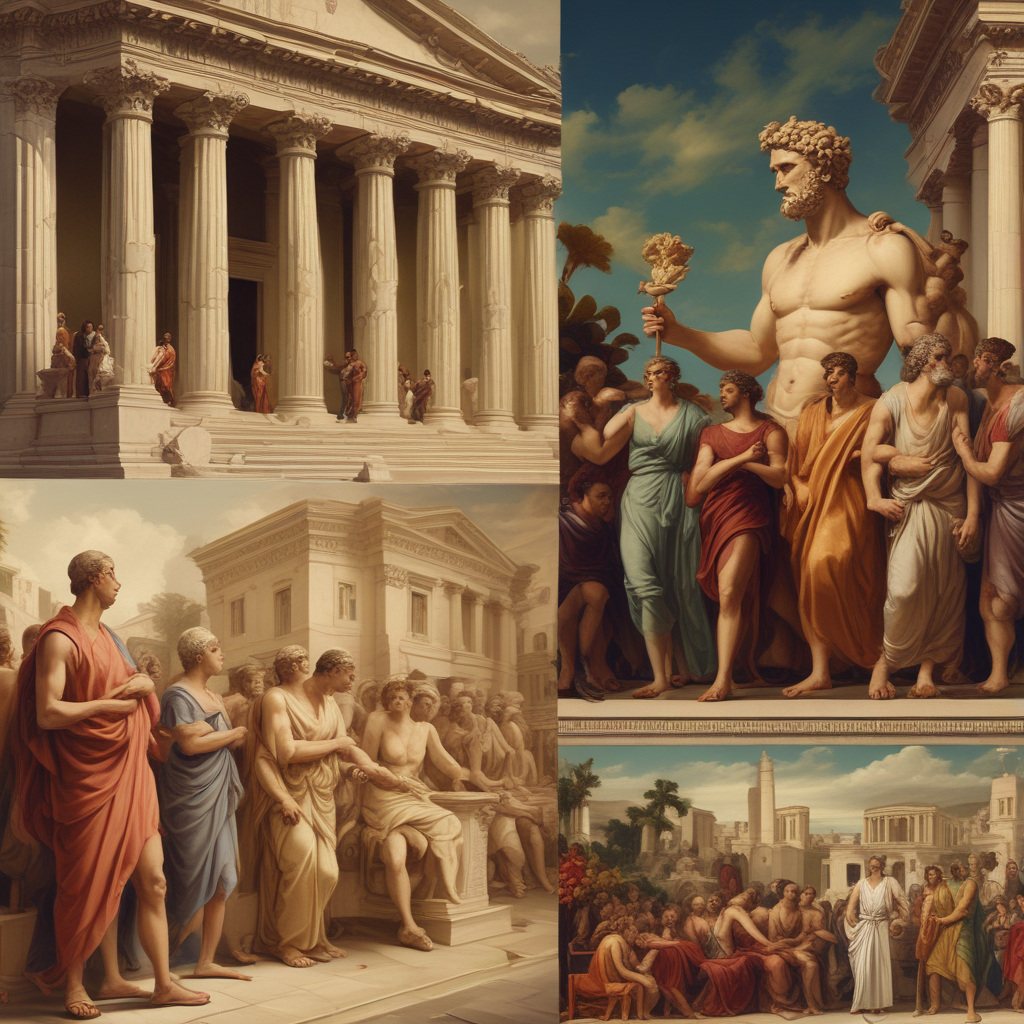
Did you know that in Baltimore, you could technically be violating park rules simply by wearing a tank top while jogging? Or that in ancient Athens, stealing a cabbage earned you the same punishment as murder – death? Welcome to the bizarre world of laws that continue to shape our daily lives, often in ways we never realize.
These bizarre laws aren’t just quirky historical footnotes – they’re active regulations that reveal fascinating insights about human nature, social control, and the evolution of civilization. From liquor regulations that ban drinking games to profanity laws that could land you in trouble for cursing near a public street, these unusual legal codes are more prevalent and impactful than you might imagine.
Ancient Origins: When Bizarre Laws Meant Life or Death
The roots of bizarre laws stretch back thousands of years, with some of the most extreme examples coming from ancient civilizations. In 621 BC Athens, a lawmaker named Draco created a legal system so harsh that his name gave us the word “draconian.”
Under Draco’s code, stealing vegetables like cabbage warranted execution – the exact same punishment given to murderers. This wasn’t an oversight or legal quirk; it was a deliberate attempt to rule through fear rather than justice. According to historical analysis from legal historians, these draconian laws were “designed to rule through fear rather than justice,” showing how legal severity was once considered an effective governing tool.
What makes these ancient bizarre laws particularly fascinating is their underlying logic. In a world without modern police forces, surveillance systems, or rehabilitation programs, extreme punishments served as both deterrent and social control mechanism. The severity wasn’t proportional to the crime’s impact – it was calibrated to the perceived threat to social order.
The Psychology Behind Extreme Legal Codes
Ancient lawmakers understood something modern legal scholars still debate: the relationship between punishment severity and behavioral compliance. When resources were scarce and social stability fragile, even minor infractions could cascade into larger problems. A person who stole cabbage might escalate to stealing livestock, livestock thieves might become bandits, and banditry could destabilize entire regions.
Modern American Oddities: Bizarre Laws in Your Backyard
Think ancient history has a monopoly on strange regulations? Think again. Bizarre laws are alive and well in modern America, governing everything from what you can wear in public parks to how bartenders serve your drinks.
Maine’s Alcohol Restrictions: No Fun Allowed
In Maine, the state’s “Prohibition Of Certain Practices” regulation creates some truly unusual restrictions for anyone wanting to enjoy a drink. Liquor license holders cannot give out free drinks, drinking games are completely banned, and any single drink cannot contain more than 4½ ounces of spirits.
These rules might seem arbitrary, but they stem from legitimate concerns about alcohol-related public safety issues and the state’s complex relationship with alcohol regulation dating back to Prohibition era policies.
Baltimore’s Fashion Police
Maryland takes public decency seriously – perhaps too seriously. In Baltimore parks, wearing sleeveless shirts is prohibited even while exercising. This means your tank top workout could technically result in a citation, regardless of the temperature or your activity level.
According to comprehensive legal databases, this regulation persists as part of broader public decency codes that haven’t been updated to reflect modern athletic wear norms.
Profanity Prohibition in Public
In Rockville, Section 13-53-a of the Municipal Code makes it illegal to use profanity or obscene language on or near public streets within another person’s hearing. This means that stubbing your toe and letting out a colorful expletive could theoretically land you in legal trouble.
These language restrictions reflect historical attempts to maintain moral standards in public spaces, though enforcement remains inconsistent and controversial given First Amendment protections.
International Perspectives: Singapore’s Social Engineering
While America has its share of unusual regulations, other countries take bizarre laws to new levels of specificity. Singapore, known for its orderly society, has created an intricate web of regulations that govern the minutiae of daily life.
Environmental Perfectionism
Singapore’s approach to public cleanliness goes far beyond typical littering laws. The city-state outlaws littering and staining of walls, lamp posts, or pillars, with enforcement that includes significant fines and public service requirements.
But the regulations don’t stop there. Barbers cannot conduct hair-cutting business in back lanes, stairways, or corridors – a rule that might seem excessive until you consider Singapore’s comprehensive approach to urban planning and public health.
According to travel experts at Fodors Travel Guide, “Singapore’s stringent environmental public health regulations reflect a comprehensive approach to urban cleanliness and public order.”
Business Location Restrictions
The barber regulation reveals something deeper about how bizarre laws can serve multiple purposes. By restricting where certain businesses can operate, Singapore maintains strict control over:
- Public health and sanitation standards
- Urban aesthetics and city planning
- Economic activity distribution
- Social order and predictability
Why These Laws Exist: The Hidden Logic of Legal Absurdity
Understanding why bizarre laws exist requires looking beyond their surface absurdity to the underlying social, historical, and practical forces that created them.
Historical Time Capsules
Many strange regulations serve as inadvertent historical records, preserving the fears, values, and concerns of past generations in legal amber. A law banning certain activities often tells us more about what worried lawmakers than what actually threatened society.
For example, Las Vegas regulations against certain street activities exist “for crowd control and avoiding disruptions to foot traffic,” according to the Las Vegas City Council and Fremont Street Experience. What appears arbitrary actually serves specific urban management purposes.
Social Control Mechanisms
Bizarre laws often reveal attempts by authorities to regulate behavior, maintain social order, or reflect moral standards of specific time periods. They function as:
- Behavioral nudges that discourage certain activities without requiring active enforcement
- Social signaling that communicates community values and expectations
- Legal frameworks that provide authorities with tools for addressing problems when they arise
- Cultural preservation that maintains traditional practices or moral codes
Real-World Impact: When Bizarre Laws Meet Modern Life
The gap between what’s technically illegal and what actually results in prosecution creates a fascinating legal landscape where bizarre laws exist in a state of selective dormancy.
Enforcement Reality
Most unusual laws are rarely enforced today, existing more as legal fossils than active regulations. However, they can still impact daily life in unexpected ways:
- Providing legal grounds for selective enforcement when authorities need additional tools
- Creating uncertainty about what activities are actually permissible
- Influencing business practices and public behavior through legal risk aversion
- Generating revenue through occasional enforcement during crackdowns
The Modernization Challenge
Legal systems face a constant challenge in keeping laws current with changing times. Updating or repealing bizarre laws often requires significant legislative effort that competing priorities make difficult to justify, even when the regulations serve no current purpose.
This creates a legal environment where ancient concerns about cabbage theft and modern worries about public profanity coexist in the same regulatory framework, managed by the same judicial system, and subject to the same enforcement mechanisms.
What Bizarre Laws Reveal About Society
These strange regulations offer a unique window into human nature and social organization. They demonstrate how societies balance individual freedom with collective order, how historical fears shape contemporary rules, and how legal systems evolve – or fail to evolve – with changing circumstances.
Bizarre laws remind us that legal systems aren’t just abstract frameworks for justice – they’re living documents that reflect our deepest anxieties, highest aspirations, and most practical concerns about living together in complex societies. Whether they’re regulating ancient vegetable theft or modern park attire, these laws continue shaping our world in ways both visible and hidden.
The next time you see someone exercising in a tank top or hear someone curse near a public street, remember: you might be witnessing the quiet rebellion against centuries of accumulated legal oddity – or simply the gap between what’s written in law books and what actually governs our daily lives.
Did You Know?
Why Your City’s Name Isn’t What You Think – The Hidden Truth Revealed
Discover the shocking stories behind place names – from Boston’s unique journey to Guatemala’s ancient meaning. What your city’s name really reveals.
Published
1 month agoon
January 19, 2026
Every time you see a street sign or tell someone where you’re from, you’re speaking a linguistic time capsule. That familiar place name carries secrets spanning thousands of years – stories of ancient civilizations, colonial conquests, and cultural exchanges that shaped our world. The hidden truth? Most of us have no idea what our own city names actually mean or where they came from.
Welcome to the fascinating world of place name origins, where every location tells a story that’s far stranger and more complex than you’d ever imagine.
The Great Name Migration: How Boston Became America’s Only Direct English Import
Here’s a fact that will surprise most Americans: Boston, Massachusetts is the only U.S. city known to be directly named after Boston, England. While dozens of other American towns share the name “Boston,” they all trace their origins either back to the Massachusetts city or to people with the surname Boston – not to the original English town.
This reveals something profound about how places got their names during America’s colonial period. Most settlers didn’t simply copy European place names wholesale. Instead, they created complex naming chains where:
- First-generation immigrants named places after their homeland
- Second and third-generation settlers named new places after the American locations they knew
- Some places were named after people who themselves carried place names as surnames
According to research documented in comprehensive studies of American place names, this pattern created a fascinating web of geographical relationships that tells the story of westward expansion better than most history books.
Lost in Translation: When Ancient Languages Shape Modern Maps
Some of the most beautiful examples of place name origins come from names that traveled through multiple languages, transforming like a linguistic game of telephone. Take Guatemala, whose name carries the poetry of two ancient civilizations.
Guatemala derives from the Nahuatl word “Cuauhtēmallān,” meaning “Place of Many Trees.” But here’s where it gets fascinating – this wasn’t the original name at all. The Nahuatl-speaking peoples were actually translating a K’iche’ Maya term into their own language. So Guatemala’s name represents a translation of a translation, preserving an ancient Maya understanding of their landscape through Aztec linguistics.
The Telephone Game Effect
This “telephone game” effect appears everywhere once you start looking:
- Place names that described practical features (like “narrow passage” or “good harbor”) in ancient languages
- Names that meant something completely different after passing through colonial transliterations
- Modern places whose names preserve extinct languages spoken centuries ago
As documented by etymological research, these linguistic layers make every place name a potential archaeological discovery waiting to be decoded.
The Human Connection: How Personal Identity Created Place Names
The relationship between people’s names and place names runs deeper than most realize. Arab family names often denote either one’s tribe, profession, a famous ancestor, or the place of origin – creating a circular system where people were named after places, then those people’s names became new place names.
This pattern spread far beyond the Arab world, influencing geographical naming patterns across continents. The result? A global map where:
- Cities carry the names of long-forgotten tribal leaders
- Mountain ranges preserve ancient occupational titles
- Rivers bear names that once described family relationships
When Places Named People Who Named Places
The most fascinating examples occur when you can trace the full circle – a person named after a place who then founded a new place carrying that name to a completely different continent. These naming chains, as explored in surname research, create invisible threads connecting distant locations across the globe.
The Politics of Place Names: Colonial Impositions and Modern Rebranding
Nothing reveals the power dynamics of history quite like place names. During the 19th century age of exploration, European cartographers grew so frustrated with repetitive naming that one expert complained about “forever encountering toponyms such as Victoria, Wellington, Smith, Jones.”
This wasn’t just laziness – it was linguistic colonialism in action. Colonial powers systematically:
- Replaced indigenous names with European alternatives
- Named geographical features after monarchs and military leaders
- Created naming systems that reinforced imperial hierarchy
- Ignored existing names that had been used for thousands of years
The Modern Pushback
Today’s world is witnessing a massive correction to these colonial naming patterns. Countries and regions are:
- Restoring indigenous place names that were suppressed
- Removing names that honor problematic historical figures
- Creating new naming protocols that respect cultural sensitivity
- Using toponymy as a tool for cultural reclamation
As detailed in modern toponymic studies, these changes reflect broader shifts in how we understand identity, power, and historical justice.
Modern Detective Work: Uncovering Place Name Mysteries
Today’s researchers use increasingly sophisticated methods to decode ancient place names. They combine:
- Archaeological evidence that reveals what languages were spoken where and when
- Historical maps showing how names evolved over time
- Linguistic analysis that traces sound changes across centuries
- DNA studies that track human migration patterns matching naming patterns
What These Discoveries Mean Today
Understanding place name origins isn’t just academic curiosity. It has real-world applications for:
- GPS and navigation systems that need to handle multiple names for the same location
- International diplomacy dealing with contested place names
- Cultural preservation efforts seeking to maintain linguistic heritage
- Tourism industries highlighting the stories behind destination names
Modern cartographers and linguists continue uncovering surprises, as documented in contemporary toponymic research, proving that our understanding of place names continues to evolve.
Every Name Tells a Story: Why This Matters in Our Connected World
In our increasingly connected world, understanding the etymology of place names helps us appreciate the incredible diversity of human experience embedded in everyday geography. Every city name, street sign, and geographical feature represents thousands of years of human history, migration, cultural exchange, and survival.
The next time you see a familiar place name, remember: you’re looking at a linguistic artifact that connects you to ancient civilizations, colonial histories, and ongoing cultural movements. These names aren’t just labels – they’re the vocabulary of human civilization itself, written across the landscape in a code that’s finally being cracked.
Place name origins remind us that our modern world sits atop countless layers of human story, and every location carries within its name the voices of all the people who ever called it home.


Trending

 Global News2 months ago
Hidden Economic Warfare: How Climate Deals Secretly Control Global Trade
 Historical Figures3 months ago
7 Anonymous Heroes Who Changed History Forever – 3 Will Shock You

 Art & Design3 months ago
Ancient Potters’ 3,500-Year-Old Chemistry Secret That Still Baffles Scientists
 Art & Design3 months ago
Scientists Just Discovered What Renaissance Artists Knew All Along – It Changes Everything

 Fun Facts3 months ago
Scientists Just Discovered Space Isn’t Silent – The Sounds Will Shock You

 News & World3 months ago
Urban Explorers’ Most Terrifying Encounters in ‘Empty’ Buildings
 Global News4 months ago
Undefined Behavior Programming: The Hidden Digital Threat
 Historical Figures3 months ago
7 Unknown Historical Figures Who Secretly Changed the World